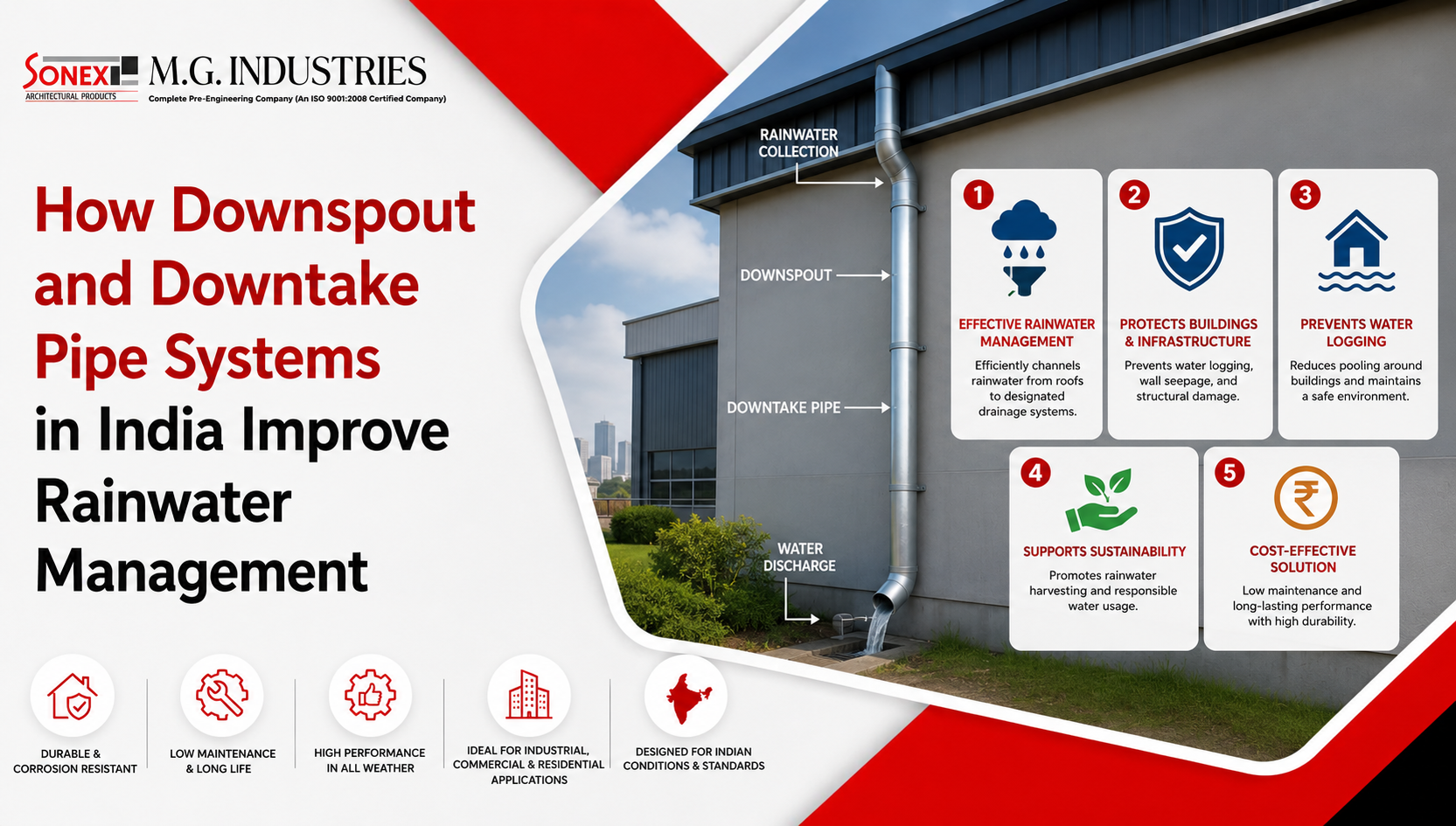
Rainwater Management Using Downspout and Downtake Pipe Systems in India. In effective rainwater management, downspout and downtake pipe systems in India play an important part by channeling rainwater from the roof to the drainage system or any other means of collection. This ensures that no water accumulates, damages the roof, or seeps through walls and erodes the foundation, or causes flooding in and around buildings. With proper design of downspouts and downtake pipes in industries, commercial, and residential properties, efficient drainage is achieved and prevents unnecessary maintenance and repairs. In India, where there is heavy rain during monsoons, these systems become vital in ensuring building integrity.
Key Takeaways
- Downspout and Downtake Pipe Systems in India are key in rainwater management.
- They ensure that there is no water accumulation on the roof. A proper drainage system prevents unnecessary expenses in repairs and maintenance.
- Foundation deterioration from water is avoided with such systems.
- They assist in rainwater harvesting and sustainability practices.
- Drainage helps in keeping industries and commercial premises safe.
- Good drainage enhances the life of buildings and roofs.
What You Need to Know?
The management of rainwater is a critical part of building design, which people often ignore until drainage issues occur. When there is heavy rain, a lot of water will be collected on rooftops and around buildings in the absence of drainage facilities.
That is where Downspout and Downtake Pipe Systems in India come into play. These systems are created to help in collecting rainwater from gutters and roofs and ensure its safe transfer to the drainage locations.
For either industrial, commercial, or residential building, rainwater drainage helps in maintaining the structural soundness of the building while reducing the difficulties of maintenance.
With rapid urban development in India, the need for an efficient water management system has increased significantly.
Important Factors
Several factors determine the effectiveness of a rainwater drainage system.
Material Quality
The performance of downspouts and downtake pipes largely depends on the quality of materials used.
Important considerations include:
- Corrosion-resistant construction
- Weather-resistant coatings
- High structural strength
- Long service life
- Low maintenance requirements
Pipe Capacity and Sizing
Proper sizing ensures the system can handle expected rainfall volumes.
Key factors include:
- Roof area dimensions
- Local rainfall intensity
- Water flow calculations
- Drainage outlet capacity
- Building design requirements
Installation Standards
Even high-quality components may fail if installed incorrectly.
Installation considerations include:
- Proper pipe alignment
- Secure mounting systems
- Leak-proof joints
- Correct slope design
- Professional installation practices
Drainage System Integration
The entire drainage network should function as a coordinated system.
This includes:
- Roof gutters
- Downspouts
- Downtake pipes
- Drainage channels
- Rainwater harvesting systems
Benefits / Advantages
Prevents Roof Water Accumulation
One of the biggest advantages of Downspout and Downtake Pipe Systems in India is their ability to remove rainwater quickly from roofing surfaces.
Benefits include:
- Reduced roof loading
- Prevention of water stagnation
- Lower risk of roof leaks
- Improved roofing performance
- Extended roof lifespan
Protects Building Foundations
Excess water around a building can gradually weaken its foundation.
Effective drainage systems help by:
- Directing water away from structures
- Reducing soil erosion
- Preventing water seepage
- Protecting structural stability
- Minimizing foundation damage
Reduces Maintenance Costs
Water-related issues often result in expensive repairs and operational disruptions.
Advantages include:
- Fewer repair requirements
- Reduced maintenance expenses
- Lower long-term ownership costs
- Improved building performance
- Greater infrastructure reliability
Supports Rainwater Harvesting
Modern buildings increasingly incorporate sustainable water management systems.
Benefits include:
- Efficient water collection
- Better resource utilization
- Reduced dependency on external water sources
- Environmental sustainability
- Improved water conservation
Enhances Safety
Poor drainage can create safety hazards around buildings.
Safety improvements include:
- Reduced slip-and-fall risks
- Prevention of waterlogging
- Improved site accessibility
- Better workplace conditions
- Enhanced operational safety
Why It Matters?
India experiences significant seasonal rainfall, particularly during the monsoon months. Without efficient drainage systems, buildings can face numerous challenges, including flooding, leakage, structural deterioration, and water damage.
This is why Downspout and Downtake Pipe Systems in India are essential components of modern infrastructure. They provide a reliable mechanism for controlling water flow and protecting valuable assets.
For industrial facilities, proper drainage safeguards machinery, inventory, and operational areas. For commercial buildings, it enhances occupant comfort and safety. For residential properties, it prevents water damage and preserves property value.
The ability to effectively manage rainwater contributes directly to the long-term durability and performance of any structure.
Common Mistakes to Avoid
-
Using Undersized Pipes- Insufficient pipe capacity can lead to overflow and drainage failures during heavy rainfall.
-
Ignoring Local Rainfall Conditions- Drainage systems should be designed according to regional rainfall patterns and intensity levels.
-
Choosing Low-Quality Materials- Inferior materials may corrode, crack, or deteriorate prematurely.
-
Poor Installation Practices- Incorrect installation can reduce system efficiency and increase leakage risks.
-
Neglecting Regular Maintenance- Blocked gutters and pipes can compromise the entire drainage system.
-
Overlooking Future Expansion- Buildings that may expand in the future should have drainage systems designed for scalability.
Expert Insights
Industry experts emphasize that rainwater management should be incorporated during the early planning stages of a construction project rather than treated as an afterthought.
When selecting Downspout and Downtake Pipe Systems in India, professionals recommend focusing on:
- Material durability
- Corrosion resistance
- Drainage capacity
- Installation quality
- Maintenance accessibility
- Compliance with construction standards
Experts also encourage integrating drainage systems with rainwater harvesting infrastructure wherever possible. This not only improves water management but also supports environmental sustainability and resource conservation.
A well-designed drainage system can significantly extend the life of roofing systems, walls, foundations, and surrounding infrastructure.
Frequently Asked Questions
What are downspouts and downtake pipe systems?
They are drainage components designed to carry rainwater from roofs and gutters to designated drainage points or collection systems.
Why are Downspout and Downtake Pipe Systems in India important?
They help prevent water accumulation, structural damage, flooding, and maintenance issues while improving overall building performance.
Can these systems support rainwater harvesting?
Yes. Many modern buildings connect downspouts and downspout pipes directly to rainwater harvesting systems for water conservation.
What materials are commonly used for downspouts and downspout pipes?
Common materials include galvanized steel, coated steel, aluminum, and other weather-resistant metals suitable for long-term use.
How often should drainage systems be inspected?
Experts recommend inspecting drainage systems at least twice a year and after major storms or heavy rainfall events.
Do industrial buildings require larger drainage systems?
Yes. Industrial facilities typically have larger roof areas and, therefore, require higher-capacity drainage systems to manage increased water flow.
Final Takeaway
Downspout and Downtake Pipe Systems in India are essential for effective rainwater management and long-term infrastructure protection. By directing rainwater safely away from roofs, walls, and foundations, these systems help prevent structural damage, reduce maintenance costs, improve safety, and support sustainable water management practices. Whether for industrial, commercial, or residential projects, investing in high-quality drainage solutions contributes significantly to building durability and operational efficiency. Companies like MG Industries provide dependable roofing and drainage solutions designed to enhance performance, protect assets, and support the long-term success of modern construction projects.
 20/6 Nuchem Compound, Mathura Road, Faridabad.
 sonexdecor@gmail.com
 +91 9599213709