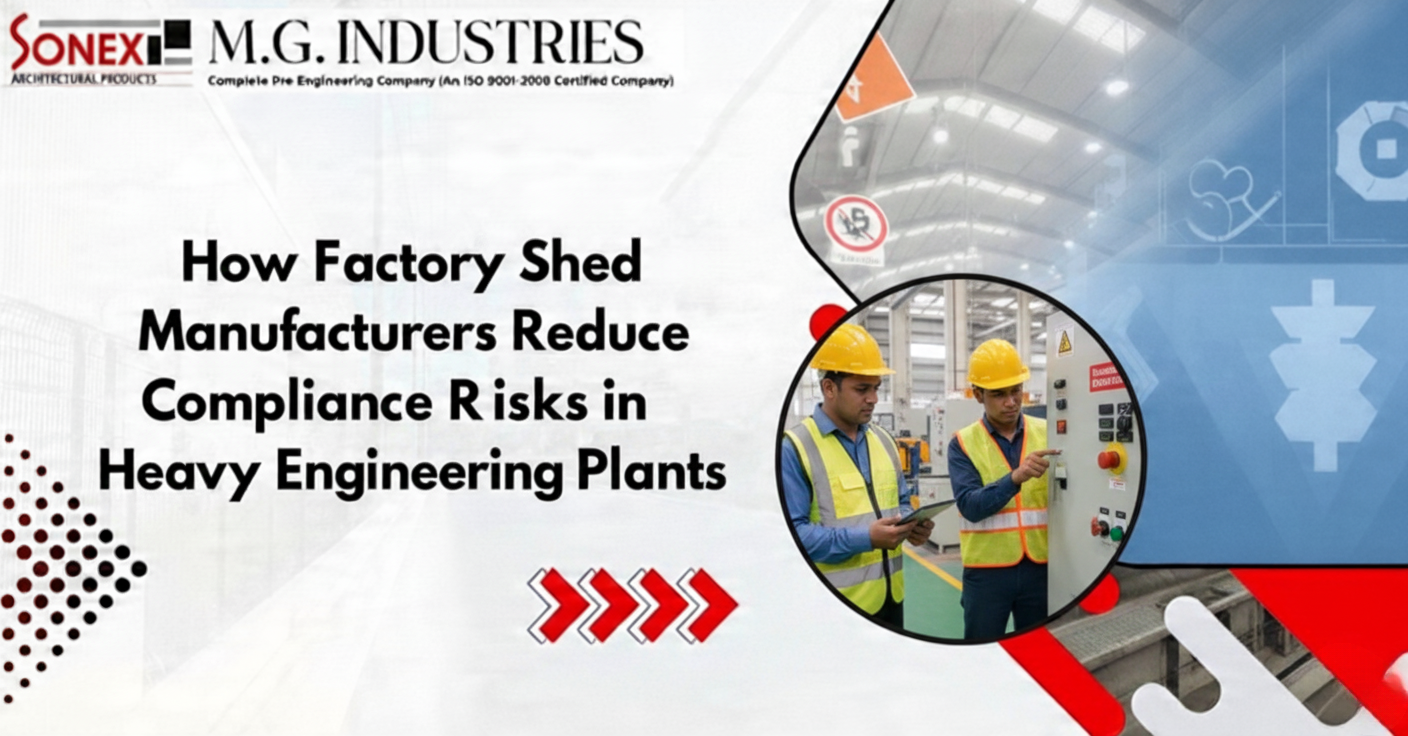
Engineering plants of a heavy nature are under one of the most critical regulatory conditions because of the size of the machinery, structural loading, risk of safety, heavy safety, and environmental implications. Safety implications. Noncompliance within these facilities may result in serious punishments and close implications. closure, or permanent tarnishing of reputation. The manufacturers of factory sheds can play a very important role in minimizing such risks by designing and building industrial structures that are in line with the statutory requirements, safety standards, and operation rules from the inception.
In comparison with traditional industrial structures, engineering sheds of the heavy engineering type demand true engineering, sophisticated material choice, and layouts that are ready to meet the requirements of compliance. The manufacturers of factory sheds can provide technical skills that consider structural integrity, safety preparedness, and regulatory compliance, so that engineering plants can carry on with their operations without experiencing a series of checks, amendments, and legal challenges.
Build Compliance-Ready Structures for Heavy Engineering Plants
Factory shed manufacturing has to do with the combination of smart design, sound engineering, and futuristic planning in order to reduce compliance risk in heavy engineering plants. Manufacturers of factory sheds incorporate the necessities of regulation at each of the shed development processes, and they consequently make sure that the heavy-duty operations are safe, efficient, and entirely compliant throughout the lifecycle of the plant.
Structural Design Aligned with Heavy Load Regulations
Heavy engineering plants contain huge machinery, cranes, and fabrication equipment that exert extreme loads on the structure.
- Calculations of loads that are developed based on industrial structural codes.
- Strengthened beams, columns, and foundations of heavy machinery.
- Wind, seismic, and dynamic loading requirements.
Crane and Material Handling Compliance Planning
The overhead cranes and heavy material movement systems are those that should have safety regulations followed to the letter.
- EOT cranes and gantry systems, Structural support system
- Correct bay spacing and clearance of height to operate cranes safely.
- Construction adherence to the lifting and material handling standards.
Fire Safety and Hazard Control Integration
The work done in the heavy engineering plants entails welding, cutting, and processes that produce heat, thus exposing fire hazards.
- Fire suppression systems: Structural provisions for fire suppression systems.
- Roofing and cladding materials that are fire-resistant.
- Special emergency exits and fire separation areas.
Electrical and Mechanical Safety Readiness
The heavy engineering facilities use electrical systems that run with heavy loads and constant demands.
- Categories of safe and high-capacity routing of electrical cabling.
- Electrical room and control panel segregation.
- Earthing/grounding for meeting the requirements of safety.
Pollution and Environmental Compliance Support
Emissions, noises, and waste that come from heavy engineering plants are normally controlled.
- Fume extraction system ventilation layouts.
- Reduction of noise by material selection and planning of layouts.
- Area space to be used in pollution control and waste management units.
Workflow and Space Planning for Safety Compliance
Dense designs augment the risks of accidents and non-compliance.
- Large clearances for forklifts and heavy vehicles.
- This is achieved by having distinctly demarcated work zones and storage space.
- Adherence to occupational safety spacing regulations.
Documentation and Approval Readiness
The regulatory approvals require proper documentation.
- Structural drawings and calculations that are ready to comply.
- Certification of quality and material tests.
- Financial assistance of legislative controls and checks.
Adaptability to Evolving Regulations
The compliance needed in heavy engineering is dynamic.
- Adaptable sheds that can be upgraded in the future.
- Building preparedness of other safety systems or pollution systems.
- Less retrofitting is required, which is expensive.
Reducing Operational and Legal Risks
The non-compliant structures subject plants to repetitive inspections and fines.
- Given that the buildings were not structurally compliant, the risk of shutdowns became minimal.
- Reduced insurance and liability.
- Greater trust in the regulatory bodies.
Supporting Long-Term Plant Stability and Expansion
A submissive shed is conducive to sustainable industrial development.
- Strict constructions that serve long-term heavy operations.
- Simple expansion without contravening existing approvals.
- Life cycle performance and safety guarantee.
Conclusion
The issue of compliance risks in the heavy engineering plants cannot be resolved by operational measures but has to be addressed at the structural level. Manufacturers of factory sheds mitigate these risks by providing designs that are ready to meet the compliance requirements that provide support to heavy loads, safety measures, environmental control, and regulatory requirements.
Their experience will mean that the engineering plants are sound in structure, legal, and functional in the long run. With the involvement of other established manufacturers like MG Industries, companies can easily come up with the heavy engineering facilities that are not only in compliance but also accommodate the safe, continuous, and scalable industrial needs.
 20/6 Nuchem Compound, Mathura Road, Faridabad.
 sonexdecor@gmail.com
 +91 9599213709