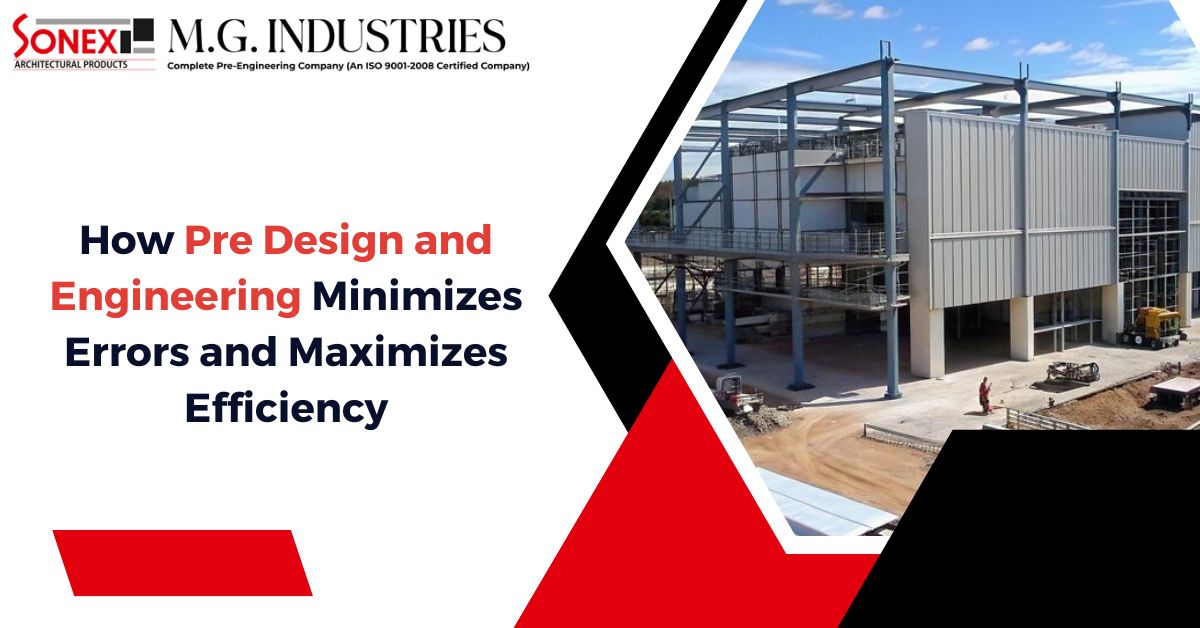
How Pre Design and Engineering Minimizes Errors and Maximizes Efficiency
In the world of modern construction and development of infrastructure, pre-design and engineering have emerged as an important process that determines the platform for successful project execution. It refers to detailed planning, analysis, and coordination that occurs well before the physical construction phase begins. This initial yet highly strategic phase can determine whether a project lives on the schedule, lives within the budget, and meets its intended performance and safety goals. At its core, the pre-design and engineering is about making clever, not difficult. From the beginning, integrating accurate foresight and cooperation helps reduce expensive errors and increases overall operating efficiency.
The Role of Pre-Design and Engineering in Construction Planning
The pre-design and engineering phase offers a wide roadmap that guides the project until the concept is completed. During this phase, engineers and architects closely collaborate to assess the conditions of the site, define the requirements, estimate potential challenges, and produce structural blueprints that align with the customer's goals. This process is required to identify risks, determine the needs of materials, and design systems that are adapted to long-term performance. Instead of contacting for construction with testing and error, this plan ensures that each stage of the project is completed intentionally and well-informed.
Identifying Risks Before They Become Problems
One of the most impressive benefits of pre-design and engineering is its ability to identify design flaws, environmental challenges, or logistical complications before the first brick is laid. Advanced tools like Building Information Modeling (BIM), structural analysis software, and simulations allow engineers to predict how a structure will behave in real-world conditions. These insights help eliminate potential pitfalls and reduce the likelihood of delays or redesigns. This early problem-solving not only saves money but also safeguards the integrity of the final structure.
Streamlining Communication and Coordination
In any construction project, miscommunication among stakeholders can lead to severe setbacks. Pre-design and engineering promote early alignment between clients, engineers, architects, and contractors. It brings everyone to the table during the critical planning stages so that design intentions, budgets, timelines, and responsibilities are clearly defined. This alignment drastically reduces the chance of revisions, disputes, or mismatches later in the process. In short, when everyone is on the same page from the start, efficiency becomes a natural outcome.

Enhancing Material and Resource Optimization
Another often overlooked advantage of thorough pre-design and engineering is its role in resource optimization. Through detailed planning and structural analysis, engineers can minimize material waste, select cost-effective alternatives, and even design structures that are easier to construct and maintain. This not only supports sustainability goals but also contributes to leaner operations and faster project delivery. Furthermore, efficient resource planning limits the risk of shortages or excesses that can derail progress.
Accelerating Project Timelines Without Compromising Quality
Many construction delays from design errors, permit issues, or unexpected site complications. By addressing these factors quickly in the pre-design and engineering phase, projects can proceed with minimal obstruction. Contractors can work with confidence, knowing that they are carrying out a well-watched and strategically sound plan. This results in a low time outline and low changes, which are usually the primary cause of budget overrun and schedule extensions.
The Role of Technology in Pre-Design and Engineering
Technology is changing the pre-design and engineering space. Digital modeling tools, simulation software, drone surveys, and cloud-based project management platforms are able to imagine and analyze designs with incredible accuracy. These technologies make it possible to quickly recur designs, clash detections, and test structural integrity under various scenarios. Consequently, the decisions are data-powered instead of the perception perception, which reduces the risk of error and increases the construction precision.

Supporting Sustainability and Green Building Goals
In today's environmentally aware construction scenario, pre-design and engineering play an important role in ensuring that stability goals are met. The initial phase plan allows for the integration of environmentally friendly materials, energy-efficient systems, and waste strategies. It also provides compliance with the Green Building Certificate, like Leed and Griha. Design can meet regulatory requirements by embedding stability in the blueprint, building long-lasting value for builders and owners.
Case Study Examples of Pre-Design and Engineering in Action
Many real-world examples show how pre-design and engineering have made extraordinary project results effective. Industrial warehouses, commercial complexes, and multi-storey steel buildings that begin with a fully designed analysis often result in a low site struggle and smooth execution. On the other hand, this stage leaves projects, expensive stages, design blueprint, and post -making performance issues are more likely to occur. The contrast is clear: Set a strong tone to strengthen.
Why Efficiency Begins With Precision
Eventually, the link between accuracy and efficiency in construction cannot be overstated. The accuracy of your engineering plans will determine how well your project flows. When every beam, bolt, and border is given a premature account, the execution becomes a case of implementation rather than improvement. This accurate manual approach saves time, wealth, and effort, greatly improving safety results.
Conclusion: The MG Industries Approach
At MG Industries, we understand it from the beginning. Our approach to pre-design and engineering reflects a deep commitment to technical excellence, risk mitigation, and project efficiency. We work closely with our customers to ensure that every element is mapped with accuracy and clarity before construction starts. By doing this, we help our partners avoid expensive errors, reduce environmental impact, and intensify the deadline to complete the project. In the rapidly developing construction scenario, MG Industries is not at the forefront of pre-design and engineering, but rather as a requirement for smart and sustainable development.
Frequently Asked Questions
Pre design and engineering aims to plan every detail of a construction project before it starts, ensuring efficiency, minimizing errors, and supporting cost-effective execution.
By identifying design flaws and site issues early on, it prevents costly revisions and unexpected delays during construction.
No, even small- and medium-sized projects benefit from early-stage planning and engineering analysis to improve overall success rates.
Modern tools include Building Information Modeling (BIM), simulation software, drone-based site surveys, and advanced 3D visualization platforms.
 20/6 Nuchem Compound, Mathura Road, Faridabad.
 sonexdecor@gmail.com
 +91 9599213709




