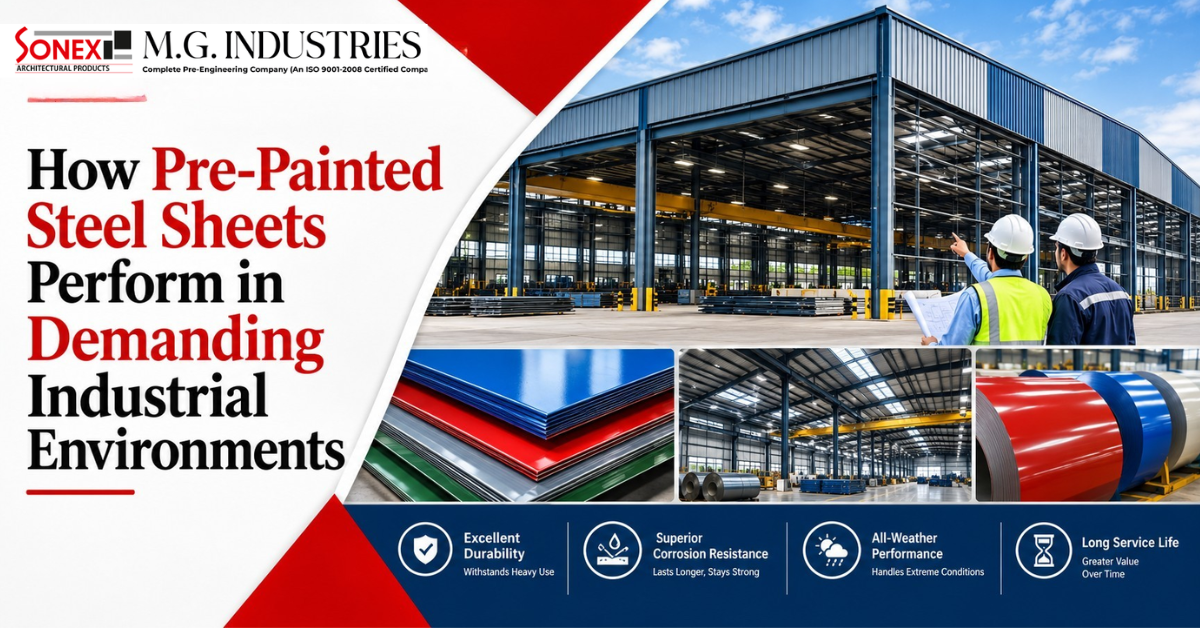
For an industrial structure, the building enclosure will be subjected to conditions that may not be encountered by other construction materials. Heat produced during manufacturing, humidity, dust, rainfall, chemical attack, ultraviolet radiation, and constant temperature changes can eventually affect roof and wall materials.
The problem for the owner of the facility lies in the choice of the material that would perform well despite being exposed to those conditions throughout the years.
This is where the pre-painted steel sheets may come in handy. With the combination of the steel core and the protective layers, the pre-painted steel sheet can offer both functionality and protection for a broad range of industrial uses.
Industry Insight
Modern industrial construction is increasingly adopting building materials that will demonstrate consistent performance throughout the lifespan of the structure. Roofing and wall cladding have great importance in protecting the building from the outside environment.
The coated steel sheets used for roofing and wall cladding are made by giving the steel an initial coat of paint or any other protective layer before it assumes the final roof or cladding shape. A consistent coating is therefore achievable through this method.
Architects and clients also benefit from increased flexibility when it comes to design, since many choices regarding colour and surface finish can be made to suit the building and its intended uses.
But for industrial construction, aesthetics is just one of the factors to consider.
Why Pre-Painted Steel Sheets Suit Demanding Industrial Conditions
The performance of a coated steel sheet depends heavily on the coating system and the environment in which it is used. When appropriately specified, the protective layers can help reduce direct exposure of the steel substrate to moisture and other environmental factors.
This makes Pre-painted steel sheets suitable for applications such as warehouses, factories, workshops, logistics facilities, commercial buildings, agricultural structures, and industrial sheds.
Their performance is particularly valuable where large roof and wall areas need consistent coverage without compromising installation efficiency.
Protection Against Environmental Exposure
Industrial buildings may be exposed to rain, humidity, sunlight, dust, and temperature fluctuations. A suitable coating system helps protect the underlying steel from environmental exposure.
However, the correct product should always be selected according to the site's conditions. A sheet intended for a relatively mild environment may not be appropriate for a highly corrosive or chemically aggressive location.
Consistent Surface Finish
Factory-applied coatings provide controlled application conditions. This can help achieve a more uniform surface appearance compared with coatings applied manually after installation.
The result is a cleaner and more consistent building envelope, particularly important for large industrial projects where extensive roof and wall surfaces are visible.
Expert Commentary
Choosing roofing or cladding material for an industrial project should begin with environmental assessment rather than product selection.
Professionals generally consider the building's location, humidity, temperature, pollution levels, chemical exposure, expected service life, maintenance practices, and structural requirements.
The coating specification is particularly important. A quality steel substrate alone does not determine the final performance of the sheet. The protective coating system, thickness, adhesion, surface preparation, and manufacturing controls all contribute to how the finished material performs.
Project teams should also consider whether the building will house processes that generate corrosive vapours or chemicals. In such environments, the roofing and cladding specification may need additional consideration.
The most suitable solution is therefore the one that matches the actual exposure conditions rather than simply the lowest-cost option.
Proof & Real-World Perspective
Consider a large warehouse located in an area exposed to seasonal monsoon rainfall and intense summer sunlight. Its roofing system must handle repeated wet and dry cycles while remaining exposed to ultraviolet radiation for long periods.
A properly selected coated steel roofing system can provide a protective surface while maintaining a consistent appearance.
Now consider an industrial facility where airborne dust and pollutants are common. Regular cleaning and inspection become more important because accumulated contaminants can affect the surface over time.
This illustrates an important point: material performance and maintenance are connected. Even a high-quality roofing sheet benefits from proper installation, drainage, inspection, and cleaning.
The same principle applies to wall cladding. A properly designed cladding system can help protect the building envelope while contributing to a uniform exterior appearance.
What Factors Influence the Performance of Pre-Painted Steel Sheets?
Several factors determine how effectively coated steel performs in an industrial environment.
Quality of the Steel Substrate
The underlying steel provides the structural foundation of the sheet. Its grade and characteristics should match the project's requirements.
Metallic Coating
A metallic coating can provide additional protection to the steel substrate. The specific coating system should be selected according to the expected environmental exposure.
Paint Coating
The paint layer provides colour and an additional protective barrier. Different coating systems can offer different levels of resistance to weathering and environmental conditions.
Manufacturing Quality
Controlled manufacturing is essential for consistent coating application, dimensions, surface finish, and overall product quality.
Installation Quality
Even high-quality Pre-painted steel sheets can experience premature problems if they are incorrectly installed. Fasteners, overlaps, cutting practices, drainage, and handling all matter.
Benefits for Industrial Roofing and Cladding
Long-Term Surface Protection
A suitable coating system can help protect the steel from environmental exposure and support longer-lasting performance.
Lower Maintenance Requirements
Durable coated surfaces can reduce the frequency of repainting compared with some conventional finishes, although regular inspection and cleaning remain important.
Architectural Flexibility
Colour and finish options allow industrial buildings to maintain a more modern and organised appearance.
Efficient Installation
Pre-finished sheets arrive with the surface coating already applied, allowing roofing and cladding work to proceed without waiting for on-site painting.
Consistent Appearance
Factory-controlled coating processes can provide a more uniform finish across large quantities of material.
Common Mistakes and Challenges
Choosing Only on Price
The cheapest sheet may not provide the coating performance required for the actual environment.
Ignoring Site Conditions
Humidity, pollution, coastal exposure, chemical vapours, and temperature variations should be considered before selecting the product.
Poor Handling
Scratches, dents, and damage during transportation or installation can compromise the protective surface.
Incorrect Fasteners
Fastener selection should be compatible with the roofing or cladding system to minimise potential corrosion-related issues.
Neglecting Maintenance
Industrial roofs and walls should be inspected periodically for damaged coatings, blocked drainage, loose fasteners, and other issues.
Recommendations for Better Industrial Performance
Before purchasing Pre-painted steel sheets, project owners should clearly define the intended application and environmental conditions.
Start by identifying whether the material will be used for roofing, wall cladding, partitions, or another application. Then assess the building's exposure to moisture, chemicals, pollution, sunlight, and temperature variations.
The next step is to review the coating specification. Ask the manufacturer about the substrate, metallic coating, paint system, thickness, finish, and recommended application conditions.
Installation should also be treated as part of the overall performance strategy. Sheets should be transported, stored, cut, fastened, and installed according to recommended practices.
Finally, establish a basic inspection and maintenance routine. Early identification of scratches, damaged areas, drainage problems, or loose components can help prevent minor issues from becoming larger maintenance concerns.
Expert Perspective on Selecting Industrial Steel Sheets
The strongest approach is to view roofing and cladding as a complete system rather than treating the sheet as an isolated product.
A manufacturer should understand the relationship between substrate quality, coating performance, fabrication, installation, and environmental exposure. This helps project teams select materials based on actual performance requirements.
For demanding industrial environments, Pre-painted steel sheets can provide a practical combination of protection, appearance, installation efficiency, and design flexibility when correctly specified.
The key is not simply choosing a coated sheet. It is choosing the appropriate coating and substrate combination for the building's specific conditions and ensuring that the material is handled and installed correctly.
Frequently Asked Questions
What are pre-painted steel sheets?
Pre-painted steel sheets are steel products that receive protective and decorative coatings under controlled manufacturing conditions before being formed into roofing or cladding profiles.
Are pre-painted steel sheets suitable for industrial buildings?
Yes. They can be used for factories, warehouses, industrial sheds, workshops, logistics facilities, and other buildings, provided the product specification matches the environmental and structural requirements.
Do pre-painted steel sheets resist corrosion?
A suitable coating system can help protect the underlying steel from environmental exposure and corrosion. Actual performance depends on the substrate, coating specification, environment, and installation quality.
Can these sheets be used for both roofing and wall cladding?
Yes. Depending on the product profile and specification, coated steel sheets can be used for industrial roofing, wall cladding, and related building-envelope applications.
How should pre-painted steel sheets be maintained?
Regular inspection, cleaning where appropriate, proper drainage, and prompt attention to damaged areas can help maintain the performance and appearance of the sheets.
What should be checked before buying industrial coated steel sheets?
Buyers should evaluate the steel substrate, coating system, environmental exposure, sheet thickness, profile, finish, manufacturer quality, installation requirements, and expected application.
Final Thoughts
Industrial buildings need roofing and cladding materials that can perform reliably under changing environmental and operational conditions. Pre-painted steel sheets can provide an effective combination of protective coating, consistent appearance, installation efficiency, and long-term practicality when correctly specified. The right choice depends on understanding the building's environment, selecting suitable coating and substrate specifications, and following proper installation and maintenance practices. For industrial roofing and cladding requirements, MG Industries provides solutions designed to support durable and functional building envelopes. A performance-focused material selection today can help businesses protect their facilities and manage long-term maintenance more effectively.
 20/6 Nuchem Compound, Mathura Road, Faridabad.
 sonexdecor@gmail.com
 +91 9599213709