In selecting the appropriate material for either roof or cladding, there are many other considerations to be made apart from its price. Some of these include the structural strength, corrosive properties, weather conditions, and expected service life, among others. Through comparing the various types ofPPGI Sheets, it becomes evident that the type of steel substrate, the protective coating, and the surrounding environment play a significant role in defining how effective the material is.
In MG Industries, selection of roofing materials depending on construction requirements is quite necessary. There are several kinds of coated steel sheets that are appropriate for roofing and cladding. However, there are differences in terms of coating technology, amount of protection, and durability. This makes it easier for one to make an appropriate choice of the most suitable kind based on the location of your building, its application, and whether it is exposed to varying weather conditions or moisture.
Understanding PPGI Sheets and Galvalume Sheets
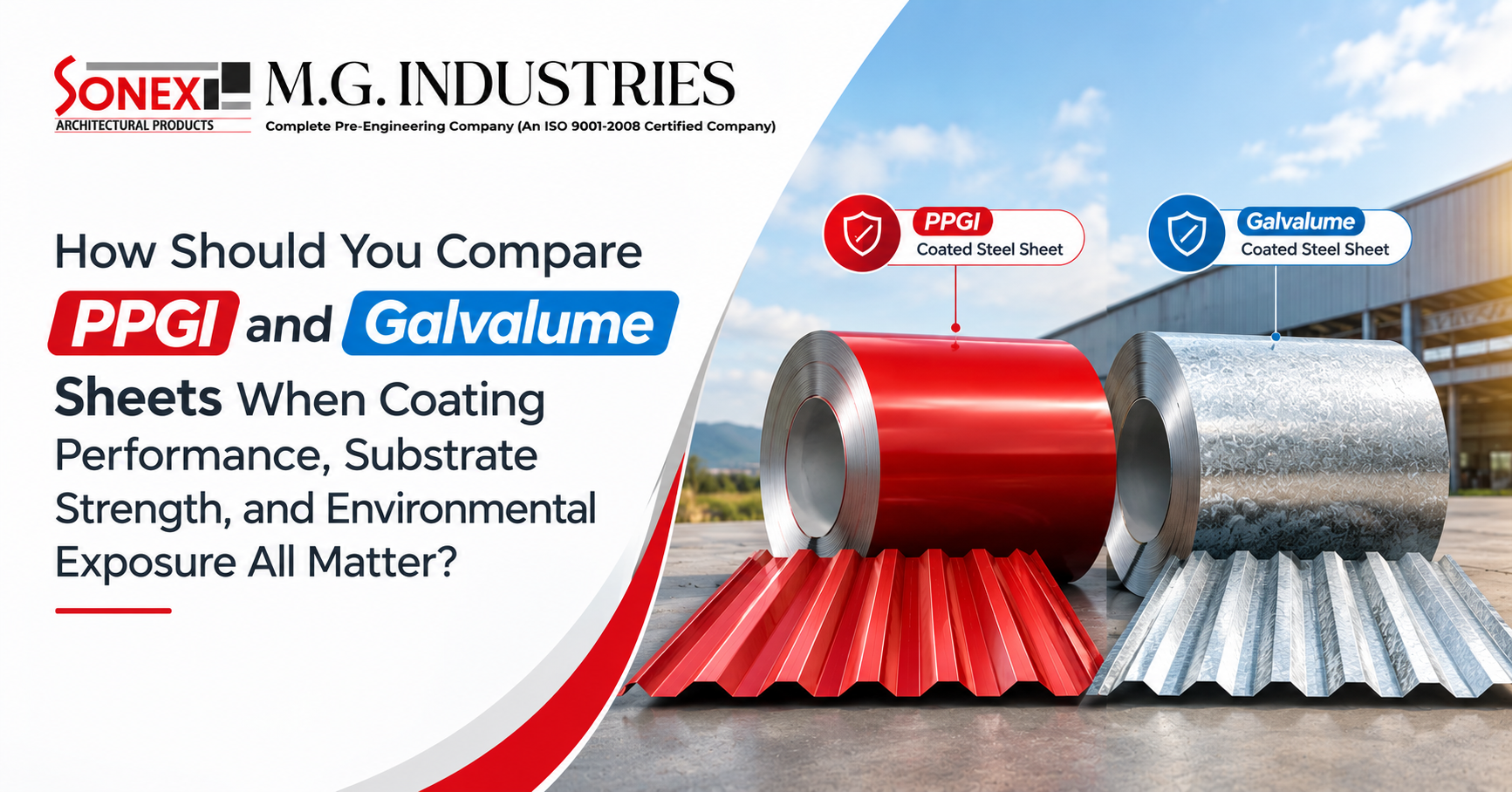
Before we proceed to compare the effectiveness of both of the materials, it is essential to get familiar with the methods of production of these materials and how they differ from each other. PPGI stands for pre-painted galvanized iron. It can be noted that in such sheets, a steel sheet serves as a base with a metal coat based on zinc and a system of paints to serve as additional protection and finishing. Paint coatings are available in different colors and therefore become an ideal material choice for those projects where not only protection but a visual aspect plays an important role. Galvalume is a metal coating mainly composed of aluminum and zinc and includes some amount of silicon in its composition. Aluminum creates a barrier protection while zinc acts as a sacrificial one.
The difference lies in the fact that PPGI uses a combination of metallic coatings and paint coatings, while traditional Galvalume only uses the metallic coating unless further paint systems are used. There is no guarantee that either will always be the best option for any particular project. The choice of the material should depend on the coating system, quality of steel, needs of the building, etc.
How Do PPGI Sheet and Galvalume Sheet Compare in Coating Performance?
Coating performance is very important for the performance of the sheet in protecting the steel substrate from damage by the environment. The sources of damage may include moisture, pollutants in the air, scratches, and improper installation methods. There are two forms of protection that exist in PPGI sheet. These include the metallic coating and the paint system. The metallic coating acts to protect the steel against corrosion, while the paint serves as another form of protection against the environment. Paint also serves to color the sheet. The performance of PPGI sheet is dependent on the quality of the paint system used, the thickness of the coating, the surface preparation, and the production process. If there is any damage to the paint coating, exposed cut edges, or inappropriate coating specifications, the performance of the sheet will be affected.
Galvalume employs a coating consisting of a metallic alloy made up of aluminium and zinc. This coating is both a barrier and sacrificial in nature. The performance of Galvalume will depend upon the composition of the coating, the weight of the coating, the type of substrate used, and the environment of application. Galvalume is fit for several applications, although the applicability of Galvalume must be determined based upon the specific environment of application. For instance, a warehouse which is located in a region that receives heavy rainfall is not the same as a factory which receives pollution. Both of these examples require different coating specifications. Therefore, a better way would be to ask for technical specifications concerning the metallic coating and paint system.
How Does Substrate Strength Affect Roofing Sheet Selection?
Galvalume employs a coating consisting of a metallic alloy made up of aluminium and zinc. This coating is both a barrier and sacrificial in nature. The performance of Galvalume will depend upon the composition of the coating, the weight of the coating, the type of substrate used, and the environment of application. Galvalume is fit for several applications, although the applicability of Galvalume must be determined based upon the specific environment of application. For instance, a warehouse which is located in a region that receives heavy rainfall is not the same as a factory which receives pollution. Both of these examples require different coating specifications. Therefore, a better way would be to ask for technical specifications concerning the metallic coating and paint system.
The sheet profile determines the stiffness of the sheets and load transfer. The common sheet profiles used for roofs include corrugated and trapezoidal. However, the right profile should be chosen according to the specifications of the project. In addition, buyers should differentiate between base metal thickness and total coated thickness of the sheet. Base metal thickness refers to the thickness of the steel while total thickness refers to the coating. Comparing these two thicknesses as if they are the same may give wrong conclusions about the quality of the product.
Buyers should ensure that the sheet purchased is suitable for the particular project before purchase. This helps in ensuring that the product is purchased for the right purpose and not just because it looks stiffer.
PPGI Sheets vs Galvalume Sheets: Key Differences at a Glance
The following table summarises the main factors to consider when comparing these materials.
Comparison Factor
PPGI Sheet
Galvalume Sheet
Coating system
Zinc-based metallic coating with a paint finish
Aluminium-zinc-based metallic coating
Appearance
Available in various colours and finishes
Usually has a metallic finish unless additionally coated
Corrosion protection
Depends on metallic coating, paint quality, and exposure
Depends on metallic coating specification and exposure
Structural strength
Depends on steel grade, base metal thickness, and profile
Depends on steel grade, base metal thickness, and profile
Environmental suitability
Requires a coating system suited to the site conditions
Requires a metallic coating suited to the site conditions
Maintenance
Depends on coating condition, installation, and exposure
Depends on coating condition, installation, and exposure
Main selection considerations
Appearance, coating performance, and application
Metallic coating performance, structural requirements, and application
Such comparisons show why there needs to be a specific evaluation of the two in relation to the project. It is not the general nature of any material that should decide its selection but the quality of the final product and its fit with the building.
How Environmental Exposure Influences Sheet Performance
Environmental factors could have an impact on the roof material's coating, aesthetics, and performance lifespan. The sheet that may suit one area might not be appropriate for another.
Coastal Areas and High Humidity
Structures located in coastal areas might be exposed to salt-contaminated air and moist air. This may increase corrosion problems when there is improper coating. In order to select the correct sheet in such circumstances, the buyer must ensure that the specified sheet is appropriate for a coastal environment. The metal coating, paints if any, fasteners, cut edges, and the method of installation are some of the factors that need to be considered. It would be incorrect to consider PPGI and Galvalume sheet appropriate for all coastal applications without consulting the manufacturer’s instructions.
Industrial Environments
The factories or manufacturing plants can expose the roof sheets to air pollutants, chemical fumes, or other such elements that might influence the functioning of the coating. The extent of exposure varies from one type of industry to another and also according to the operating conditions. In such cases, it is important to know what kind of contamination the material might have to withstand before selecting the material.
Areas with Heavy Rainfall
Due to the high amount of rainfall, it becomes all the more important to focus on drainage and installation. The improper slope of the roof, non-sealed joints, edge damage, and water accumulation around fasteners might increase the chances of corrosion. Both PPGI and Galvalume can be used as roofing material; however, the whole roof structure must ensure proper drainage of water.
Hot and Sunny Regions
Where there is a high amount of solar radiation and temperature, the performance of the coating would need consideration. With PPGI sheet, the chemical nature of the paint used, as well as its quality, could affect weather resistance and color change ability. Galvalume Sheetscould work in case the metallic finish is acceptable, but all these should take into consideration the overall roofing system. Ventilation, insulation, and design of the roof will also have an effect on the internal environment.
Which Material Offers Better Long-Term Value?
But this is just the beginning of the story. True value is determined by the material’s ability to function in real-world conditions, how much maintenance it will need, and how well its specifications will match the building’s requirements. PPGI sheet may be appropriate where there is a need for both a coloured finish and corrosion resistance. They offer more variety in appearance and can be used for industrial, commercial, and warehouse buildings, provided that the paint and metallic coating specifications will match the exposure conditions. Galvalume sheet may be appropriate where there is a need for an aluminium-zinc-based metallic coating and metallic appearance is acceptable.
For comparing costs, it is important to assess products that have comparable base metal thickness, steel types, profiles, and performance needs. An inexpensive product might not be able to deliver on expectations because of its coating and structural inadequacies for the particular site. The cost of maintenance must be considered as well. Regular checks will reveal any problems with coating, loose fasteners, drainage, among others. The maintenance needs of the product must be discussed with the supplier prior to purchasing the product. The best product is one that is able to balance all these factors within the building’s life expectancy.
What Should You Check Before Buying PPGI Sheet or Galvalume Sheet?
The first thing that comes to mind in terms of a reliable comparison is the product specifications. The buyer needs to ensure the thickness of the base metal, steel grade, coating specifications, and dimensions of the profile before proceeding. In terms of PPGI, the buyer must ensure the metallic coating and paint specifications and see if the finish will be appropriate for the intended environment. In terms of Galvalume, the buyer must ensure the metallic coating specification and see if it will be appropriate for the intended exposure.
Installation requirements should not be overlooked. Proper fixation techniques, overlaps, cutting skills, and adequate storage are necessary in order to avoid any damage to the material. Find out from the provider what the proper installation and maintenance process is for the material you have chosen. Finally, do not forget to ask for technical sheets and specifications. You will be able to compare your options and not make a mistake based on appearance and pricing alone.
Common Mistakes to Avoid When Comparing Roofing Sheets
A common mistake would be to consider that thickness is always an advantage when it comes to sheets. Even though this is true, steel quality, profile type, span between supports, and load will also decide whether or not the sheet can be used. It is an error to evaluate the resistance to corrosion from just the coating. Environment, coating thickness, paint quality, and application methods might have influence as well. The fact that a material performs well in a regular outside environment does not mean that it will do well in a very corrosive environment. Another mistake that buyers make would be to compare total coated thickness with base metal thickness.
In addition, don’t overlook the relevance of installation and maintenance. Improper handling, wrong choice of fasteners, and inadequate drainage might impair the performance of a good roofing material. An analysis of all factors should be made in relation to the substrate, coating, profile, mode of installation, and the environment.
Conclusion
Comparing the properties of both products entails the necessity to understand the issues of coating performance, strength of substrates, and environmental exposure. The structure of PPGI is a metallic and painted coating, while the coating of Galvalume is based on an aluminium-zinc metallic coating. Both can be considered as options for roof and cladding in case they meet the requirements for their use. To make a choice, consider the thickness of the metal base, steel grades, coatings, profile, etc. Take into account the location of the building, moisture or pollution exposure, appearance, and maintenance of the product chosen.
Discussion of your needs for roof and cladding materials may be initiated byMG Industries. You may discuss the type of building, installation location, preferred finishes, and structural needs so that you may come up with a material that suits your needs. An informed choice of material will ensure good performance and value.
Frequently Asked Questions
PPGI sheet consists of a metallic coating with zinc and a painted coating, whereas Galvalume sheet has an aluminium-zinc metallic coating. Suitability of the materials depends on the application and environment.
Neither of the materials is superior in all environments; performance depends on coating specifications, paint system (where applicable), installation, and environment.
Yes. The thickness of the base metal is one of the factors that determine the strength of the sheets, along with others.
Both may be suitable, based on the construction of the building, environmental conditions, and other requirements. The chosen product should fit the specifications of the project.
Buyers should look into the thickness of the base metal, quality of the steel, coating specifications, profile size, environmental suitability, installation requirements, and price.
 20/6 Nuchem Compound, Mathura Road, Faridabad.
 sonexdecor@gmail.com
 +91 9599213709