The industrial roof should not only act as a cover but also be able to offer an efficient roof structure while at the same time remaining aesthetically pleasing. Among the design aspects that may prove to be important is how the roof sheets are linked together and secured.
Raised seams in a Standing Seam Sheet roof system act as joints between the adjoining roof sheets to conceal the majority of the fixing points rather than having them exposed on the roof face. This is a factor that can become important for industrial structures where aesthetics and quality of installation are key considerations.
Businesses that are engaged in the construction of warehouses, factories, production plants, and similar industrial buildings will find that having knowledge of concealed fastening techniques will assist them in making the right selection of the right roof. MG Industries is a company that specializes in providing industrial roof solutions.
What Is a Standing Seam Sheet Roofing System?
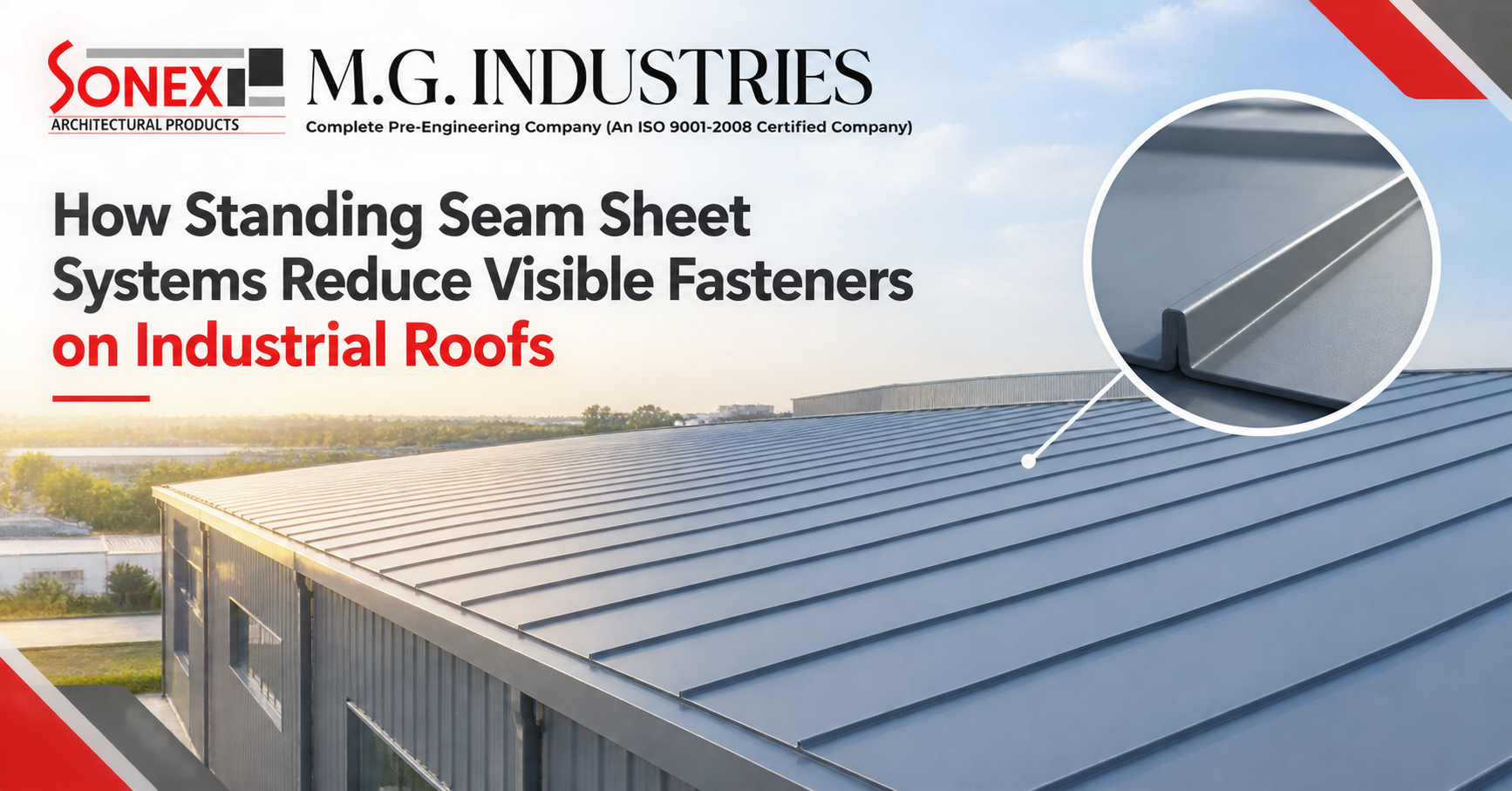
A standing seam roof consists of long metal panels connected through raised seams. Instead of placing exposed fasteners through the visible face of every panel at regular intervals, the panels are joined and secured through the seam arrangement. The basic concept is relatively straightforward:
- Roofing panels are positioned next to one another.
- The edges of adjacent panels are formed into raised seams.
- Fastening points are incorporated into the concealed portion of the system.
- The seam connection holds the panels together while maintaining a continuous roof appearance.
The exact fastening method can vary depending on the roofing design, panel profile, supporting structure, and installation requirements. However, the key distinction is that the fixing arrangement is designed to keep many fasteners away from the main visible surface of the roof. This is particularly useful for industrial roofs, where large roof areas can make exposed fasteners highly noticeable.
How Standing Seam Sheet Systems Hide Visible Fasteners
The main reason these systems reduce visible fasteners is their connection method. In conventional exposed-fastener roofing, fasteners are generally driven through the face of the roofing panel and remain visible after installation. With a standing seam arrangement, the connection is shifted toward the raised seam. The fastener is positioned within or beneath the seam area, depending on the particular system. The next panel or seam component then covers the fixing point.
This creates a roof surface where the eye sees the panel and raised seam pattern rather than rows of exposed screws. The difference becomes more noticeable as the roof gets larger. On an extensive industrial building, hundreds or thousands of visible fixing points can interrupt the appearance of the roof. Concealing many of those points produces a more consistent visual finish.
The role of the seam
The seam is not simply a decorative feature. It forms an important part of the panel connection. Because the panels are joined at their edges, the roof does not rely on the same face-fastening arrangement that is common with simpler sheet profiles. The raised seam provides a dedicated area for connecting adjacent panels and integrating the fixing mechanism into the roof assembly. This gives the roof a more continuous appearance from a distance while keeping the main panel faces relatively clear.
Why Fewer Visible Fasteners Matter on Industrial Roofs
The reduction of visible fasteners may seem like a small design detail, but it can influence several aspects of an industrial roofing project.
1. A cleaner architectural appearance
The roofs of industrial buildings usually have large flat surfaces. The exposed fasteners could make a pattern over this surface.
The use of a hidden fastening system will ensure that the surface remains clean. The raised joints would form the major lines of the roof. This could be helpful if the roof is visible from the surroundings, including adjacent buildings or elevated roads.
2. Reduced visual clutter
A roof covered with regularly spaced exposed fasteners can look busy, especially when viewed across a large area. By moving many fixing points into the seam, the roofing design focuses attention on the panel layout rather than individual screws. This creates a simpler visual pattern without changing the fundamental purpose of the roof.
3. Better integration with modern industrial design
Industrial architecture does not only involve functional buildings that are tucked away from sight. Contemporary industrial buildings have placed an increasing amount of emphasis on the aesthetics of the building envelope. A standing seam roof would help this idea, as it will provide the roof with continuity in terms of lines rather than a roof with visible fixing points.
4. Easier visual inspection of the roof surface
A cleaner roof surface can also make it easier to visually identify certain details during inspection. Instead of having numerous exposed fasteners spread across the panel faces, attention can be directed toward seams, joints, penetrations, drainage areas, and other important roof components. However, proper inspection and maintenance requirements still depend on the complete roofing system and its installation.
Concealed Fastening vs. Exposed Fastening
Understanding the difference between the two approaches makes the benefit clearer.
|
Feature
|
Exposed-Fastener Roofing
|
Standing Seam System
|
|
Fastener visibility
|
Fasteners remain visible on the panel face
|
Many fasteners are concealed within the seam arrangement
|
|
Surface appearance
|
More fixing points are visible
|
Cleaner, more continuous panel surface
|
|
Panel connection
|
Panels are commonly fixed through their face
|
Panels are connected along raised seams
|
|
Visual pattern
|
Fastener rows can be prominent
|
Seams become the primary visual lines
|
|
Design suitability
|
Practical for applications where exposed fixing is acceptable
|
Useful where a cleaner roof profile is preferred
|
Neither approach should be selected based on appearance alone. The roof design, structural requirements, panel specifications, installation method, environment, and project objectives all need to be considered.
Installation Quality Still Matters
A concealed fastener system does not automatically guarantee a successful roofing installation. The quality of detailing and installation remains important. Roof panels need to be correctly aligned, seams properly formed or connected, and fixing components installed according to the requirements of the selected system. Areas such as roof penetrations, edges, transitions, ridges, and drainage details also require careful attention.
This is particularly important on industrial buildings because roof dimensions can be substantial. Small installation inconsistencies can become more noticeable across a large roof area. The selected roofing profile should therefore be considered as part of the complete building envelope rather than as an isolated sheet product.
Where Standing Seam Roof Systems Can Be Useful
A concealed fastening roofing system can be considered for industrial and commercial roofing projects where a cleaner roof appearance and reduced visibility of fixing points are important. A concealed fastening roofing system can be considered for industrial and commercial roofing projects where a cleaner roof appearance and reduced visibility of fixing points are important.
Potential applications include:
- Manufacturing facilities
- Warehouses
- Industrial sheds
- Commercial buildings
- Large storage facilities
- Production and processing facilities
- Other structures requiring metal roofing systems
The suitability of a particular profile depends on the project's technical and architectural requirements. Roof slope, supporting structure, panel dimensions, weather exposure, detailing, and installation conditions should all be evaluated before selecting the system.
Why Concealed Fastening Can Improve the Overall Roof Appearance
Roofing for industrial buildings usually covers some of the largest areas on a building’s exterior. If the screws are exposed and visible repeatedly over such a large area, then they would disrupt the visual continuity of the panel surface. This changes when we consider concealed fastening. The seam lines give a consistent line while the fastening system becomes secondary.
It does not really matter what the material looks like. What we are seeing is a completely different assembly process. This is an important consideration for architects and building owners. It is more than just deciding on a sheet. It is about the connection process of the roof panels, the fixing systems, and the final appearance of the roof.
What Should You Consider Before Choosing a Seam System?
Before selecting a concealed-fastener roofing solution, consider the following:
Building purpose: It is necessary that the roof suits the purpose of the industrial building. Roof design: The panel shape, roof shape, slope, edges, ridges, and openings should all be compatible. Structural requirements: The roofing system should be compatible with the supporting structure and project specifications. Installation method: The connection system should be installed correctly to achieve the intended performance and appearance.
Maintenance Access: The roof, when completed, should provide for proper maintenance procedures. Aesthetic issues: In case there is a lot of roof surface visibility on the building, the issue of seams and fixing points might be an essential one. Taking these points into consideration from the beginning can prevent the roof from becoming an afterthought in the building process.
Conclusion
Reducing visible fasteners is one of the key visual advantages of a Standing Seam Sheet roofing approach. By incorporating many fixing points into the raised seam connection, the system can provide a cleaner panel surface and a more consistent appearance across large industrial roofs.
The decision should still be based on the complete project requirements, including structure, roof design, installation, detailing, and intended use. When these factors are considered together, concealed fastening can contribute to a more refined and organised industrial roof design. For industrial roofing, roofing sheets, cladding, and related building solutions, MG Industries can help businesses evaluate options according to their project requirements and application.
Frequently Asked Questions
1. What are some of the advantages of hidden fasteners?
They provide a cleaner roof surface by keeping many fixing points hidden and reducing visible rows of screws.
2. Can hidden fasteners be used for large industrial structures?
This will depend on how the project is designed and what is technically required. Hidden fasteners may work for warehouses, factories, industrial sheds, etc.
3. Does installation quality affect roof performance?
Yes. Proper alignment, fastening, seam connection, and detailing are important for achieving the intended performance of the roofing system.
4. Is it possible to enhance the look of a factory by using this method of roofing?
Yes, this is because there will be fewer fixings, which will make the roof look neat and organized.
5. What considerations are important when choosing a roofing system?
Some of the considerations include the intended purpose of the building, roof design, structural requirements, installation methods, maintenance requirements, climatic conditions, and appearance.
 20/6 Nuchem Compound, Mathura Road, Faridabad.
 sonexdecor@gmail.com
 +91 9599213709