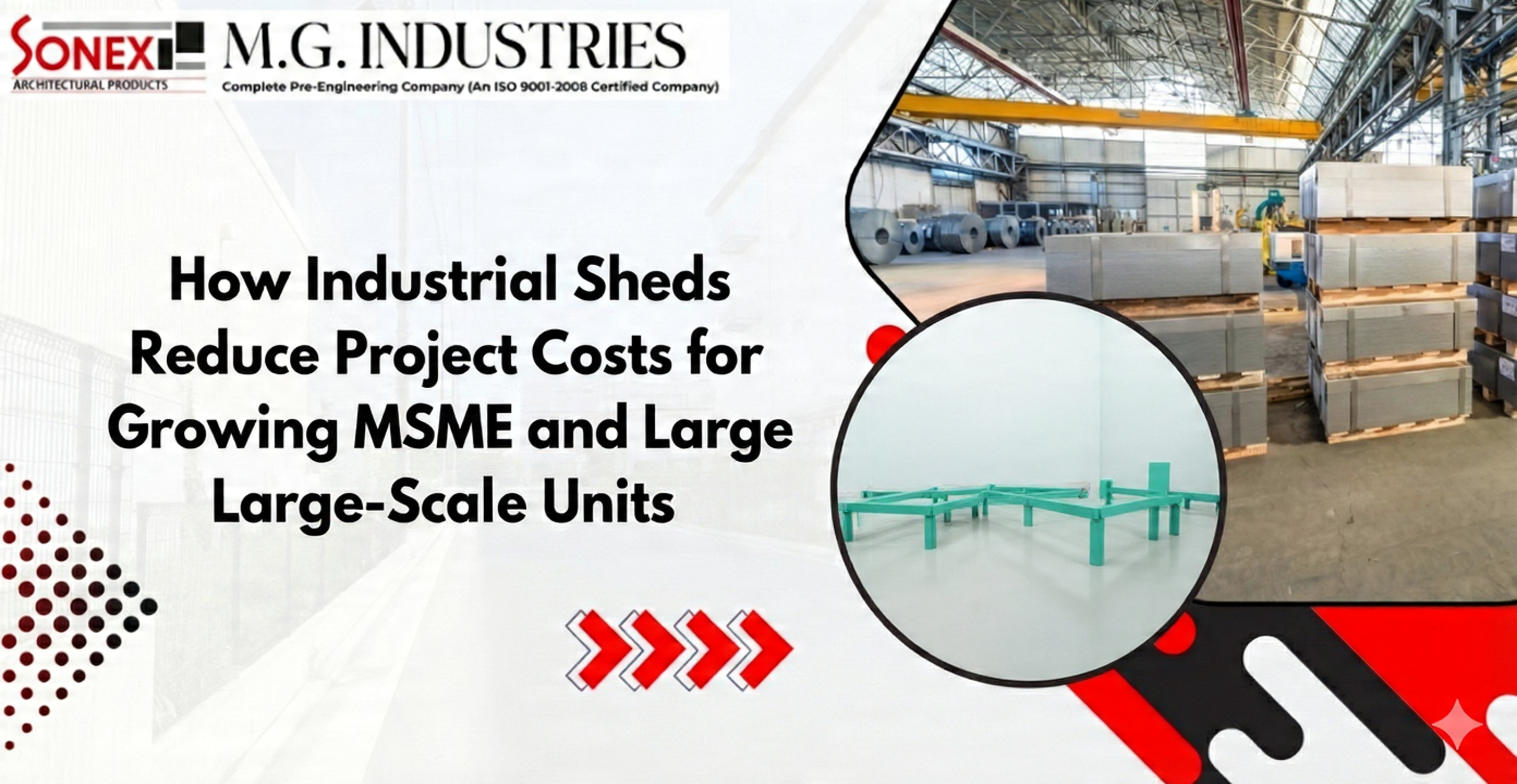
Industrial Sheds have become one of the most strategic investments for both MSME units and large-scale industries looking to expand without excessive capital expenditure. As manufacturing, warehousing, logistics, and processing sectors evolve, companies are under pressure to scale quickly while keeping budgets under strict control. In this scenario, Industrial Sheds offer a cost-effective, durable, and flexible alternative to conventional RCC buildings. The ability to customize, modify, relocate, or expand the structure makes these sheds particularly valuable for industries that experience demand fluctuations or operational upgrades. With speed of construction, reduced structural weight, and optimization of raw materials, this approach significantly supports businesses aiming for financial efficiency.
Why Industrial Sheds Offer Faster Construction and Lower Labor Costs?
A major reason Industrial Sheds help reduce project costs is the significantly shorter construction timeline. Traditional buildings require extensive groundwork, curing time, heavy labor involvement, and multiple trades working simultaneously. In contrast, shed structures are largely pre-fabricated off-site, minimising on-site work and reducing dependency on skilled labor. When time on-site decreases, labor hours drop drastically, resulting in immediate cost savings. Faster construction also means businesses can start operations sooner, reducing downtime and preventing revenue losses associated with project delays. For MSMEs especially, every saved month directly impacts cash flow and operational planning.
Material Efficiency and Reduced Waste in Industrial Shed Construction
Another key factor in cost reduction is the efficient use of raw materials. Industrial Sheds are designed with advanced structural analysis, ensuring steel members are optimized for load-bearing without unnecessary excess. Compared to conventional buildings, this leads to minimal material wastage, lower procurement costs, and faster fabrication cycles. Additionally, the lightweight yet strong nature of the materials reduces transportation costs and simplifies the installation process. For large-scale units working across multiple locations, this ability to standardize components and reuse materials in future expansions creates long-term financial benefits.
Customizability That Eliminates Future Renovation Expenses
One of the most underrated advantages of Industrial Sheds is the flexibility they offer. As industries grow, their operational layouts often change—machinery is added, production lines shift, storage areas expand, and new departments emerge. Traditional structures are expensive to modify and often require heavy civil changes. Industrial Sheds, however, are designed with modularity in mind. Additional bays can be added, clear heights increased, mezzanine floors installed, and internal partitions rearranged with minimal disruption. This flexibility not only saves money during the initial build but also significantly reduces long-term renovation and adaptation costs. For dynamic sectors like FMCG, logistics, and automotive components, this adaptability becomes a major financial advantage.
Reduced Maintenance Costs and Longer Lifespan of Industrial Sheds
The maintenance cost of Industrial Sheds is far lower compared to concrete structures. Steel components are coated, treated, and engineered to withstand corrosion, weather variations, and industrial wear. Modern cladding systems also improve durability and minimize the need for painting or repairs. Since there is no risk of cracks, leaks, or heavy structural deterioration, the lifecycle cost of the shed becomes much lower. For MSMEs striving for operational continuity without unexpected repair expenses, this stability is essential. Large-scale units also benefit because maintenance schedules become predictable and manageable, reducing disruptions and unplanned costs.
Energy Efficiency and Cost Savings Through Modern Shed Design
Energy consumption is one of the highest operating expenses in manufacturing and warehousing facilities. Properly designed Industrial Sheds can significantly reduce power usage through ventilation systems, natural lighting provisions, insulated roofing, and heat-reflective materials. When the internal temperature is controlled naturally, industries spend less on cooling and artificial lighting. This becomes especially crucial for sectors that operate round the clock. Moreover, energy-efficient design aligns with sustainable goals, which can help businesses qualify for green certifications or subsidies, offering another layer of financial benefit.
Operational Efficiency That Translates Into Direct Cost Reduction
Beyond construction and maintenance, Industrial Sheds directly influence operational efficiency. Their spacious, column-free designs allow smoother movement of forklifts, material handling machinery, and workforce. Production lines can be arranged more systematically, and inventory management becomes easier due to improved visibility and accessibility. For logistics and warehousing, loading and unloading become faster, cutting down labor hours and increasing throughput. When businesses run more efficiently, overall operational costs decline, and productivity increases—creating a measurable impact on profitability.
Why Industrial Sheds Are Ideal for Both MSMEs and Large Enterprises
While MSMEs need cost-effective solutions to enter new markets or expand operations, large-scale units require scalable structures for high-volume production. Industrial Sheds meet the needs of both. MSMEs can start with smaller units and expand affordably as business grows. Larger enterprises, on the other hand, can deploy multiple units rapidly across varied geographies. The combination of affordability, speed, scalability, and long-term durability makes Industrial Sheds a logical choice for industries planning sustainable growth. Their ability to match business requirements without overstretching budgets is what makes them indispensable in modern industrial development.
Conclusion
Industrial Sheds offer a strategic blend of cost-efficiency, speed, durability, and adaptability, making them the preferred choice for growing MSME and large-scale units. From reducing construction timelines to cutting maintenance expenses, optimizing materials, and supporting operational efficiency, these structures help industries achieve growth without financial strain. For businesses looking to expand intelligently and sustainably, partnering with an experienced manufacturer like MG Industries ensures superior quality, advanced engineering, and long-term reliability in every project.
 20/6 Nuchem Compound, Mathura Road, Faridabad.
 sonexdecor@gmail.com
 +91 9599213709