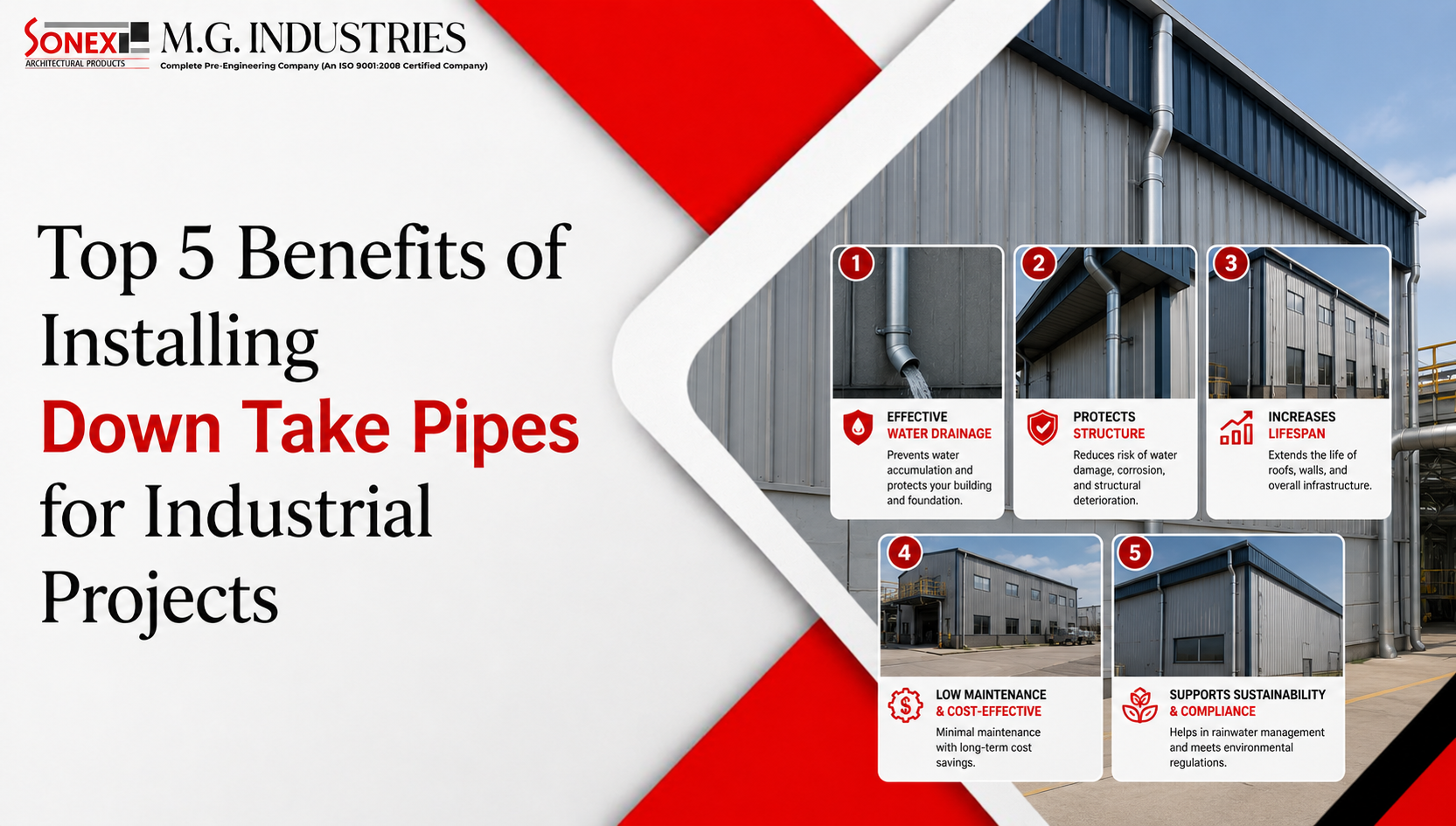
The importance of installing Down Take Pipes for Industrial Projects is critical for successful rainwater management and structural integrity. The installation of high-quality down take pipes helps drain rainwater into appropriate outlets without causing any problems related to water buildup, structural damage, or operational interruptions. By investing in good quality down take pipes, there will be an increase in drainage effectiveness, cost savings on repairs, better safety measures, and adherence to construction standards in the industrial sector.
Key Takeaways
- Down Take Pipes for Industrial Projects are responsible for the efficient drainage of rainwater.
- It helps in avoiding leaks in roofs.
- Good drainage systems save on repair costs.
- Quality down-take pipes ensure better safety in the workplace.
- They help in making sure the building's life is long-lasting.
- Heavy rains can be handled by industrial sites with the help of drainage pipes.
- Sustainable construction of infrastructure becomes possible with good drainage pipes.
What You Must Know?
Roofs of industrial buildings cover vast areas and receive considerable amounts of rainwater during monsoons or stormy seasons. In the absence of a good drainage system, rainwater may cause several problems for the building.
Here comes the importance of Down Take Pipes for Industrial Projects. They transport the rainwater collected on rooftops directly to the drainage channel or storage systems, thus saving the building from the hazards caused by rainwater accumulation.
A good down take pipe system also increases the efficiency of the whole roofing system.
Important Factors
Before selecting a down take pipe system, several important considerations should be evaluated.
Material Quality
The durability of down take pipes largely depends on the material used.
Key considerations include:
- Corrosion-resistant construction
- Weather-resistant materials
- High-strength metal or coated steel
- Long operational lifespan
- Low maintenance requirements
Pipe Size and Capacity
The drainage capacity should match the roof size and expected rainfall levels.
Important factors include:
- Roof area coverage
- Rainfall intensity in the region
- Water flow requirements
- Proper sizing calculations
- Drainage system compatibility
Installation Quality
Even premium-quality pipes may underperform if installed incorrectly.
Installation requirements include:
- Proper alignment and slope
- Secure fastening systems
- Leak-proof connections
- Adequate support brackets
- Professional installation practices
Integration with Drainage Systems
The down take pipe system should work seamlessly with the building’s drainage infrastructure.
Consider:
- Drainage outlet positioning
- Water discharge management
- Rainwater harvesting compatibility
- Overflow prevention measures
- Long-term maintenance accessibility
Benefits / Advantages
1. Prevents Roof Water Accumulation
One of the primary benefits of Down Take Pipes for Industrial Projects is efficient roof drainage.
Without proper water discharge systems, rainwater can accumulate on roofing surfaces and increase structural stress.
Benefits include:
- Faster water removal
- Reduced roof loading
- Prevention of water stagnation
- Improved roof performance
- Enhanced roofing lifespan
2. Protects Building Foundations
Excessive water around a building's perimeter can weaken foundations and create long-term structural issues.
High-quality down take pipes help by:
- Directing water away from foundations
- Preventing soil erosion
- Reducing water seepage risks
- Protecting structural stability
- Supporting long-term durability
3. Reduces Maintenance and Repair Costs
Water-related damage often leads to expensive repairs and operational interruptions.
Advantages include:
- Lower maintenance expenses
- Fewer drainage-related repairs
- Reduced roof restoration costs
- Less structural deterioration
- Better lifecycle cost efficiency
4. Improves Workplace Safety
Standing water and drainage failures can create safety hazards within industrial facilities.
Safety improvements include:
- Reduced slip-and-fall risks
- Prevention of water leaks inside buildings
- Improved employee safety
- Better operational conditions
- Enhanced compliance with safety standards
5. Supports Sustainable Water Management
Modern industrial facilities increasingly focus on environmental responsibility.
Benefits include:
- Rainwater harvesting integration
- Efficient water collection systems
- Reduced environmental impact
- Sustainable infrastructure support
- Better resource utilization
Why It Matters?
Water management is often overlooked until drainage issues begin affecting operations. In industrial environments, poor drainage can result in roof leaks, equipment damage, production disruptions, and costly repairs.
Installing Down Take Pipes for Industrial Projects provides a proactive solution that safeguards infrastructure and supports uninterrupted business operations.
Industries operating in regions with heavy rainfall especially benefit from reliable drainage systems. Proper water management protects investments, enhances operational efficiency, and extends the life of both roofing systems and building structures.
The long-term financial savings often far exceed the initial installation cost, making down take pipes an essential component of modern industrial infrastructure.
Common Mistakes to Avoid
-
Choosing Undersized Pipes- Small-capacity pipes may not handle heavy rainfall effectively, leading to overflow and drainage failures.
-
Ignoring Material Quality- Low-quality materials are more susceptible to corrosion, cracking, and premature failure.
-
Poor Installation Practices- Incorrect installation can cause leakage, misalignment, and inefficient water flow.
-
Neglecting Regular Maintenance- Blocked pipes and drainage systems can reduce efficiency and increase water-related risks.
-
Overlooking Future Expansion- Drainage systems should be designed to accommodate future building modifications and increased roof areas.
Expert Insights
Industry professionals recommend evaluating drainage requirements during the initial project planning stage rather than treating them as an afterthought.
When selecting Down Take Pipes for Industrial Projects, experts suggest focusing on:
- Material durability and corrosion resistance
- Adequate drainage capacity
- Compatibility with roofing systems
- Ease of maintenance
- Compliance with construction standards
- Long-term performance expectations
Experts also emphasize integrating down take pipes with comprehensive rainwater management strategies to maximize efficiency and sustainability.
A well-designed drainage system protects the building, reduces maintenance costs, and contributes significantly to the overall performance of industrial infrastructure.
Frequently Asked Questions
What are down take pipes used for in industrial buildings?
Down take pipes are used to carry rainwater from roofing systems to drainage outlets, preventing water accumulation and structural damage.
How do down take pipes protect industrial structures?
They direct rainwater away from roofs and foundations, reducing the risk of leaks, erosion, corrosion, and water-related deterioration.
What materials are commonly used for industrial down take pipes?
Common materials include galvanized steel, coated steel, aluminum, and other corrosion-resistant metals suitable for industrial applications.
How often should industrial down take pipes be inspected?
Experts recommend inspecting drainage systems at least twice a year and after major storms to ensure optimal performance.
Can down take pipes support rainwater harvesting systems?
Yes. Many industrial facilities integrate down take pipes with rainwater harvesting systems for efficient water collection and reuse.
Why is pipe sizing important for industrial projects?
Proper sizing ensures efficient drainage during heavy rainfall and prevents overflow, water accumulation, and system failures.
Final Takeaway
Installing Down Take Pipes for Industrial Projects is a critical investment in the safety, durability, and efficiency of industrial infrastructure. These systems help manage rainwater effectively, protect roofs and foundations, reduce maintenance costs, and support sustainable water management practices. By choosing high-quality materials, proper sizing, and professional installation, businesses can ensure long-term drainage performance and infrastructure protection. Companies like MG Industries understand the importance of reliable roofing and drainage solutions and provide products designed to enhance structural integrity, operational efficiency, and long-term project value.
 20/6 Nuchem Compound, Mathura Road, Faridabad.
 sonexdecor@gmail.com
 +91 9599213709