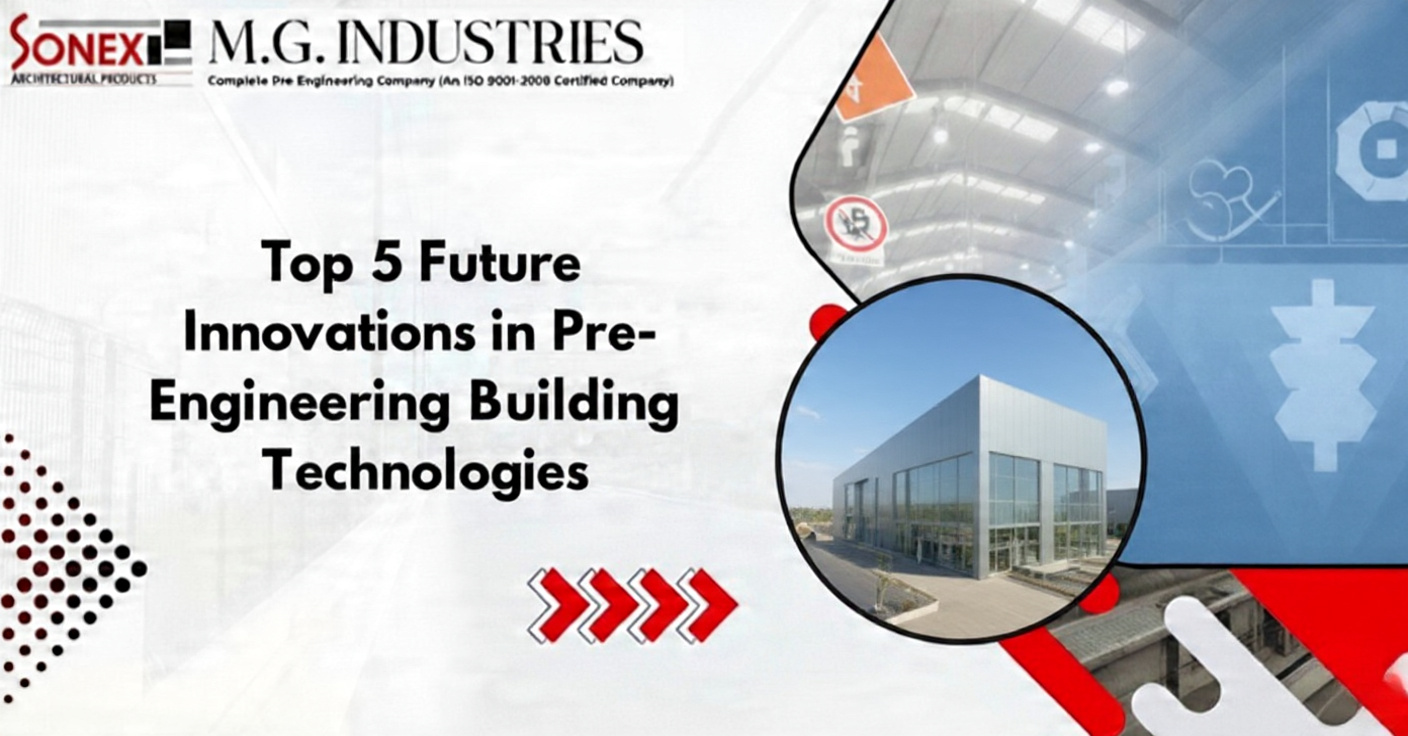
The pre-engineered buildings have changed the manner in which the planning, designing, and execution of the industrial and commercial infrastructure are being done. Due to the needs of industries to deliver projects faster, create greener materials, and develop more intelligent approaches to construction, pre-engineered building technologies are changing swiftly. These inventions are not only streamlining the construction process but also redefining durability, performance with regard to energy, and long-term operational worth. Being aware of these future trends would allow businesses to make wise decisions during the planning of the industrial sheds, warehouses, and manufacturing facilities.
The Evolution of Pre-Engineered Buildings in Modern Construction
Pre-engineered structures are no longer simple steel structures. Nowadays, they incorporate the use of sophisticated design programs, accuracy of manufacturing, and intelligent materials to address the increasing demands of industrial growth. Automation, sustainability, and digital integration are some of the forces that can empower the future of this segment, and Pre-Engineered Building Technologies are smarter and a more performance-oriented solution than ever.
Why Innovation Is Critical in PEB Systems
The builders are being compelled by industrial developments, regulations, and cost demands to implement new solutions. Pre-Engineered Building Technologies are future-ready to make the construction process faster and more energy efficient, and to be able to comply with new safety and environmental standards and regulations.
The Major Innovation Drivers are:
- Industrial growth and development of infrastructure.
- The need to have sustainable and energy-efficient buildings.
- Faster construction of the project and less disruption on the site.
- Increasing labor and material expenses.
Top Innovations Shaping the Future of Pre-Engineered Building Technologies
It is speculated that the following innovations will transform the way Pre-Engineered Building Technologies will be designed, manufactured, and installed in the next few years.
Advanced BIM and Digital Twin Integration
PEB projects are also embracing building information modeling and digital twins, which will be part of projects in the future. The tools enable manufacturers to have a simulation of the whole building lifecycle, even without building it.
Digital modeling enhances the effective coordination between design, fabrication, and erection teams and reduces mistakes and material wastage. The digital twins assist facility owners in predicting the necessity to carry out maintenance and to streamline operations at the building through real-time performance monitoring.
Key Advantages Include
- Proper visualization of a project before implementation.
- Conflict identification and mitigation.
- Coordination among stakeholders.
- Lifecycle performance management.
Smart Steel and High-Performance Alloys
Innovative material is becoming an important factor in the development of Pre-Engineered Building Technologies. Alloys made of high-strength and lightweight steel are currently being developed to enhance the load-carrying capacity at a lower overall weight of the structure.
The current materials are of high quality, and they increase the durability, corrosion resistance, and seismic performance, which is why they are suitable in industrial settings where harsh conditions are observed.
The Advantages of Smart Steel Use:
- Decreased structural dead load.
- Increased anti-corrosion and anti-fatigue.
- Better results in seismic areas.
- Extended construction life with reduced maintenance.
Energy-Efficient Insulated Panel Systems
The current PEB designs are more oriented towards thermal efficiency and sustainability in the future. The use of superior wall and roofing panels, such as PUF and PIR, is much lower in terms of heat transfer and energy consumption.
The use of energy-efficient panels ensures that industries retain their internal temperatures, enhancing the comfort of the workers and lowering the cost of heating and ventilating. Pre-Engineered Building Technologiescan be a good solution to green and sustainable construction due to this innovation.
Key Benefits Include:
- Better thermal-acoustic insulation.
- Reduced energy use and cost of operation.
- Green building compliance.
- Improved level of comfort indoors.
Automation and AI-Driven Manufacturing Processes
The manufacturing aspect of the Pre-Engineered Building Technologies is being revolutionized through automation. The fabrication systems can be controlled by AI to make sure that cutting, welding, and assembly are precise, and human error is minimized, as well as to enhance consistency.
Robotic production lines boost the pace of production and, at the same time, ensure high quality. Predictive analytics also assists manufacturers in optimizing material use and project schedules.
The Major Results of Automation are:
- Reduced manufacturing cycles.
- Better dimensional tolerance.
- Reduced material wastage
- Uniformity in the quality of projects.
Modular and Hybrid Construction Systems
PEB is going to have a future in modular and hybrid constructions that are made by using steel structures and prefabricated elements, including mezzanine floors, service modules, and facades.
Modular construction enables concurrent offsite production and onsite assembly, which will reduce project schedules substantially. These scalable systems would allow scaling up or changing easily with the changing business demands.
The Benefits of Modular Innovation:
- Faster project completion
- Scalability and flexible design.
- Less dependency on labor on the site.
- Better safety in construction.
Sustainability and Compliance as Core Innovation Drivers
Sustainability has ceased to be a choice in industrial construction. The future Pre-Engineered Building Technologies are to be created in accordance with the international sustainability objectives and standards.
Green Design and Low-Carbon Construction
The present innovations are concerned with the minimization of the carbon footprint of steel buildings by means of efficient design and recyclable materials, and the optimization of manufacturing processes. Integration of solar-ready roofing and rainwater harvesting systems is also emerging as a standard feature.
Innovations of Sustainable PEB will Sustain:
- Less environmental impact.
- Energy-efficient operations
- Adherence to environmental policies.
- Greater corporate sustainability objectives.
Enhanced Fire and Safety Engineering
The use of fire-resistant finishes and the incorporation of smart fire detection systems and designed ventilation will become part of the future PEB designs. The characteristics increase the safety of occupants as well as guarantee regulatory compliance in the industrial sectors.
Innovations that are motivated by safety are
- Wall and roof assemblies that are fire-resistant.
- Smoke and heat ventilation systems.
- Fully integrated safety monitoring machinery.
- Better emergency evacuation planning.
The Business Impact of Future PEB Innovations
The use of high-tech Pre-Engineered Building Technologies has a direct impact on business performance. Quick commissioning allows the start-up of production quicker, and energy-efficient designs lower long-term operations.
The companies investing in future-ready PEB solutions enjoy better asset value and operational resiliency, as well as adapt to the fluctuating production needs.
The Main Advantages of the Business are
- Lower costs of the project lifecycle.
- Increased efficiency of the facilities.
- Improved employee efficiency and protection.
- Scalability and flexibility on a long-term basis.
Conclusion
The future of industrial construction is through innovation-driven Pre-Engineered Building Technologies, which are based on speed, sustainability, safety, and intelligent design. Since these technologies are ever-changing, it is important to find a partner who is experienced and has a progressive outlook to succeed in the long run.
MG Industries is on top of these inventions by incorporating the use of sensitive design protocols, quality of materials, and current manufacturing technologies. As a firm that puts a high emphasis on long-term solutions, MG Industries contributes to the development of efficient, compliant, and future-fit industrial buildings that are capable of facing challenges in the years ahead.
 20/6 Nuchem Compound, Mathura Road, Faridabad.
 sonexdecor@gmail.com
 +91 9599213709