Metal casting has been the cornerstone of industrial development for centuries, serving machinery, vehicles, infrastructure, and countless engineering products as the backbone. As we step into 2025, the demand for metal castings remains not only strong but is also growing significantly due to technological innovation, growing market needs, and global industrial expansion. Whether it is an automobile that you drive, the aircraft in which you play an important role in shaping the board, equipment powering factories, or infrastructure supporting modern life, metal casting efficiency, durability, and functionality.
Automotive Industry and Lightweight Precision Casting
The automotive industry dominates the use of metal casting, but the nature of the demand has changed in 2025. Electric vehicles (EVS) are gaining momentum worldwide, with a focus on mild aluminum and magnesium castings that reduce overall vehicle weight while maintaining structural power. Cast components such as engine blocks, transmission housing, and battery enclosure take rapidly in mind.
Growing push for permanent dynamics and strict emission norms has forced vehicle manufacturers to innovate with high-performance castings that improve thermal management and energy efficiency. Advanced casting techniques, such as high-pressure dye castings, are widely adopted to achieve strong components. The growth of the EV industry ensures that motor vehicle manufacturers will continue to carry forward demand for high-quality casting in the coming years.
Aerospace Industry and Complex Casting Demands
In aerospace, the demand for metal casting is mainly fueled by the requirement for durable components yet fuel that can withstand extreme operating conditions. Aircraft engines, turbines, landing gears, and significant structural parts are rapidly produced using high-power alloys such as titanium and nickel-casting.
In 2025, the aerospace industry is also experiencing increased activity due to increased global travel and rapid progress in space exploration. Aerospace companies are carrying forward the limitations of design complexity, the need for casting technologies that can produce complex geometry with complete precision. Combined additive manufacturing, combined with traditional casting methods, has further enhanced production capabilities, ensuring low waste and rapid lead time.
The result is an increase in demand for cast components that balance performance, safety, and cost efficiency, one of the fastest-growing consumers of aerospace casting technology.
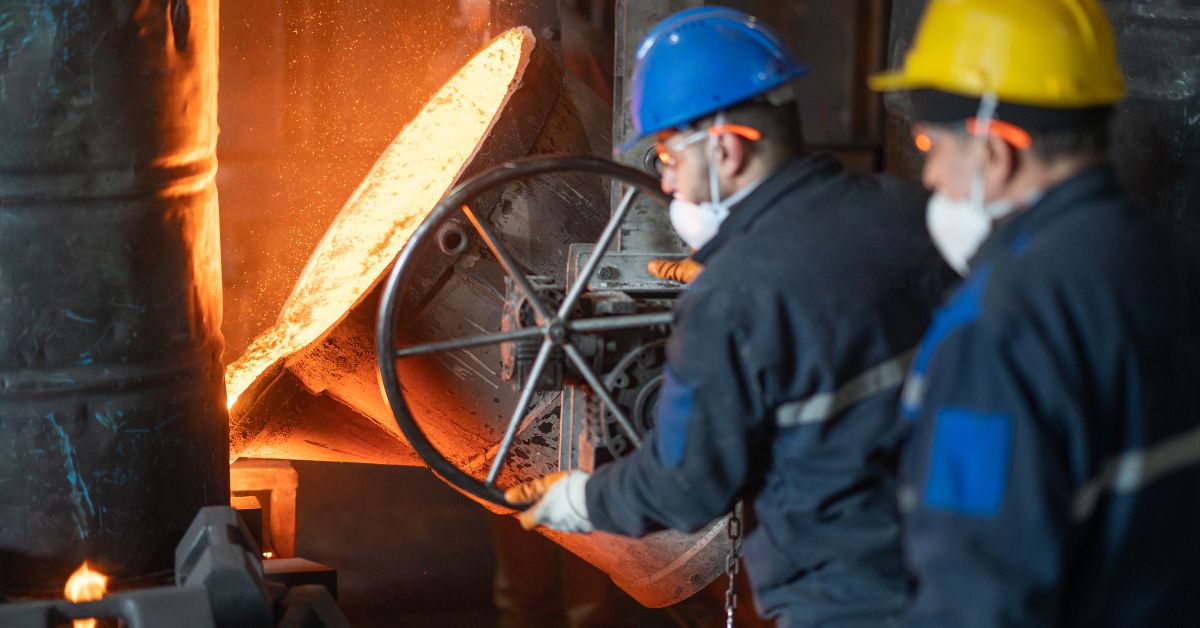
Construction and Infrastructure Growth with Cast Components
As urbanization spreads globally, the construction and infrastructure industry has become one of the largest end-users of metal casting in 2025. From structural support and pipelines to fittings, valves, and machinery components, cast metal plays an important role in modern development projects.
Increasing emphasis on sustainable and smart cities has further enhanced the need for durable and reliable casting products. In particular, domaining iron and steel casting, water and sewage systems, bridges, and transport are in high demand for infrastructure. The long life and cost-effectiveness of the cast components make them indispensable in large-scale construction. The demand for cast products in manufacturing is expected to increase continuously in this decade, making heavy investments in infrastructure with governments of Asia, Africa, and the Middle East.
Energy and Power Generation Industry
The energy sector is another major consumer of casting, which contains applications with traditional fossil fuel plants, renewable energy installations, and nuclear facilities. In 2025, the rapid expansion of renewable energy projects - such as wind turbines, hydroelectric plants, and solar farms - has increased casting requirements.
For example, Pawan Turbines, gearboxes, hubs, and large castings for housing are very much on the components. Hydropower plants use heavy-duty castings for turbines and structural devices, while nuclear features demand precise castings made of special alloys to ensure safety and longevity.
Even in oil and gas fields, casting pipelines, drilling equipment, and refinery machinery are important. Global push towards energy transition has not reduced the need for casting, but has diversified it, ensuring frequent demand in many energy sources.
Industrial Machinery and Equipment Manufacturing
In 2025, the demand for the fifth major industry driving casting is industrial machinery and heavy equipment. From mining and agriculture to manufacturing and logistics, industrial machines require durable casts capable of withstanding high stress and continuous operation. Large-scale equipment such as crushers, conveyors, pumps, compressors, and gear systems relies on metal castings for strength and reliability. The global expansion of manufacturing hubs in regions such as India, Southeast Asia, and Latin America has intensified the demand for casting solutions that provide both efficiency and cost-effectiveness.
Additionally, automation in machinery and integration of robotics have further increased the need for accurate casting, as manufacturers seek parts with high-dimensional accuracy and longevity.
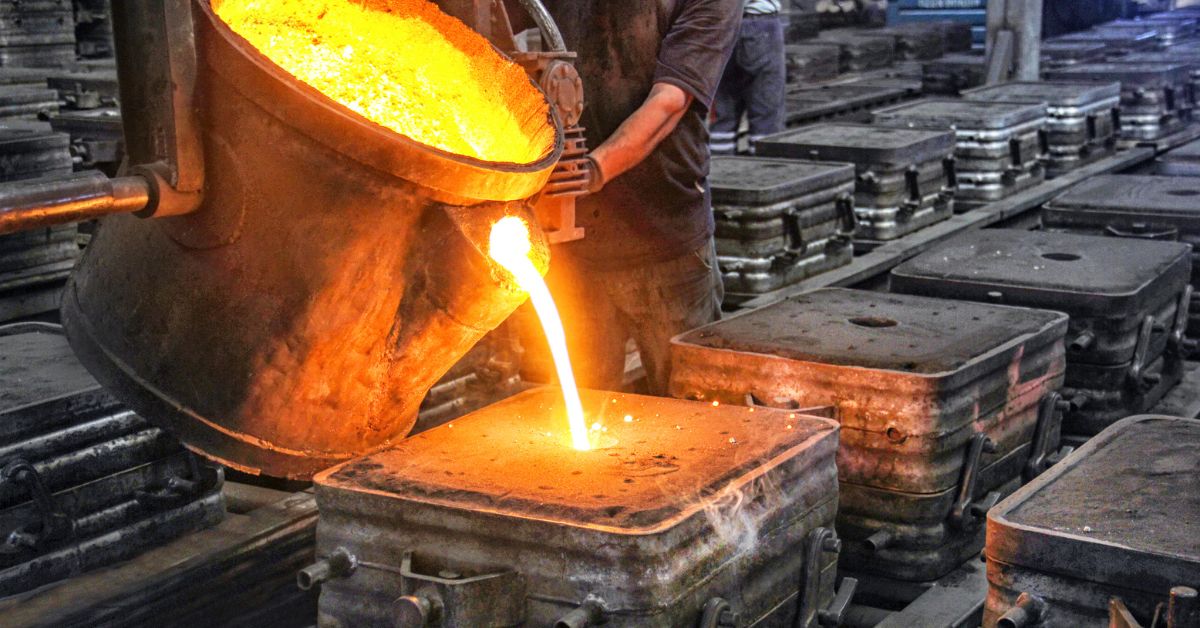
Why the Demand for Metal Castings is Growing
The overall increase in casting demand in industries lies in many major drivers. First, technological innovation in casting processes has enabled a rapid production cycle, high precision, and cost reduction. Secondly, infections towards permanent industries have pushed manufacturers to seek strong yet light materials, where castings provide the ideal solution.
The global infrastructure creates huge opportunities for development, urbanization, and industrial expansion casting industry. Meanwhile, the rise of electric vehicles, aerospace exploration, and renewable energy ensures a consistent and diverse customer base for casting manufacturers.
In short, metal casting remains the foundation for modern industrial progress, in which the expansion of its applications is in line with the technical and economic scenario.
Conclusion
Metal castings have developed in 2025 due to traditional manufacturing solutions to become unavoidable components of advanced industries. Motor vehicles, aerospace, manufacturing, energy, and industrial machinery sectors continue to demand heavy demand for casting products, while technological innovation ensures that the industry speeds up with new challenges and expectations.
As global industries shift toward smarter, greener, and more efficient solutions, metal castings stand strong as the backbone of durable and reliable production. Companies that specialize in delivering high-quality casting solutions are perfectly positioned to meet the growing needs of these industries. Among them, MG Industries has built a strong reputation by combining technical expertise with advanced manufacturing capabilities, ensuring reliable casting solutions for a wide range of sectors. Their commitment to quality and innovation makes them a trusted partner in supporting industrial growth across the globe.
 20/6 Nuchem Compound, Mathura Road, Faridabad.
 sonexdecor@gmail.com
 +91 9599213709