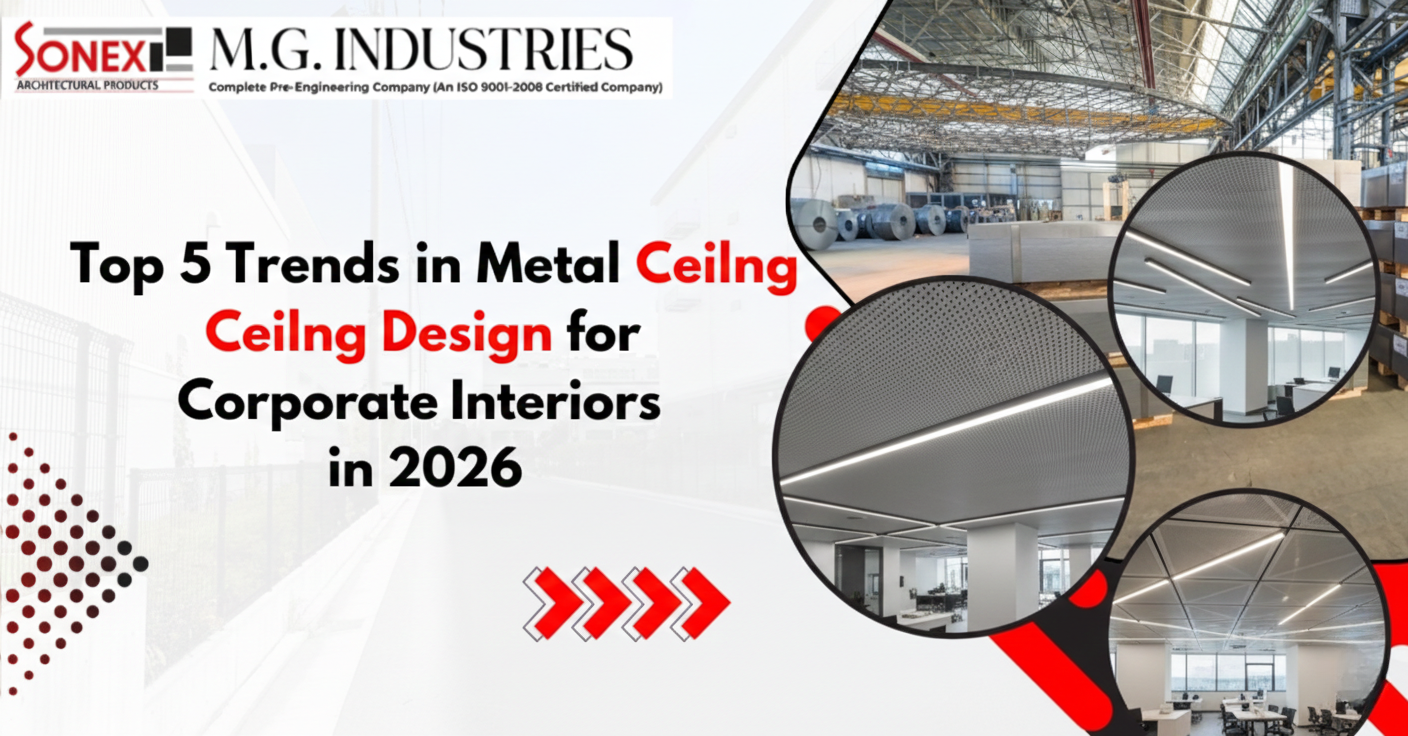
Incorporating the latest trends, both in terms of functionality and design, the corporate interiors in 2026 are determined by the ceilings as the critical element of the contemporary working environments. The reason why Metal Ceiling Design has emerged as a favorite in corporate spaces is that it offers a combination of aesthetics, performance, durability, and compliance. Whether it is boardrooms or the collaborative areas, metal ceilings have become a determining factor in the appearance, touch, and functionality of offices in a competitive business world.
1. Linear Metal Ceiling Systems for Contemporary Office Architecture
Linear metal ceilings are also emerging as a fashion in the interiors of the corporate world as a result of their clean, organized, and visually organized look. These ceiling systems assist in the formation of smooth continuity throughout the expansive office floors and still have a modern architectural identity.
Why Linear Ceiling Layouts are Gaining Popularity
Linear profiles being used in metal ceiling design enable designers to establish zones with the help of narrow distances, without any physical boundaries. They are compatible with the open-plan offices and provide corporate spaces with a high-end, uncomplicated look.
- Produces a smooth and slick professional outlook.
- Best wide-area corporate floor plans.
- Combines well with lighting and heating.
- It improves the spatial movement without visual distraction.
2. Acoustic-Optimized Metal Ceilings for Productive Workspaces
Noise management has become an important issue in modern offices, not only in collaborative work cultures but also in open layouts. The use of acoustic metal ceilings has become common in order to enhance clarity of speech and minimise distractions by sound.
Improving workplace comfort through acoustic performance
The advanced metal ceiling design has perforated panels that have acoustic support that supports absorbing noise, and at the same time has a modern appearance. This proportion assists in the creation of concentrated workplaces without the loss of aestheticism.
- Minimizes echo and sound reverberation.
- Enhances articulations in conference rooms.
- Increases worker focus and comfort.
- Enforcement of acoustic requirements at the workplace.
3.Smart Lighting Integration with Metal Ceiling Systems
The field of lighting design has become a strategic component of corporate interiors, and ceilings have now become the focus of this change. One of the most powerful trends affecting the office environment in 2026 is smart lighting integration.
Seamless integration of technology and Ceiling Design
Modern metal ceiling design enables accurate positioning of the lighting fixtures, sensors, and emergency devices without disrupting the symmetry of the ceilings. This would lead to energy saving and a balanced workspace.
- Audits sensor lighting and automated lighting.
- Maintains equal lighting in offices.
- Makes use of less energy and operational cost.
- Improves the visual comfort of the staff.
4. Sustainable and Recyclable Metal Ceiling Materials
The corporate construction projects are a significant motivator of sustainability. The adoption of metal ceilings is gaining traction owing to environmental concerns and sustainability.
Aligning Corporate Interiors with Sustainability Goals
Sustainable metal ceiling design for environmentally conscious organizations is made of recyclable metal and galvanized steel to help organizations meet green building requirements.
- Minimizes construction wastage through recyclability.
- Has a high service life and low maintenance.
- Facilitates compliance with green buildings.
- Reduces long-term replacement and lifecycle costs.
5. Customized Metal Ceilings Reflecting Corporate Brand Identity
The interiors of the corporations are not generic anymore. Firms are incorporating design in expressing their brand culture, values, and identity, and ceilings are being turned into a strong branding medium.
Personalizing Ceilings for Stronger Brand Presence
Individual Metal Ceiling Construction allows individual finishes, colors, and patterns to be used that meet corporate branding without compromising functionality and durability.
- It is permissive to brand-aligned colors and textures.
- Increases the aesthetic value in reception and lobby space.
- Establishes a unique company image.
- Endorses high-end interior positioning.
The Role of Metal Ceilings in Safety and Compliance
Apart from the aesthetic and functionality aspects, metal ceilings also have significant importance when it comes to the safety of corporate buildings. They are non-combustible, and that makes them suitable for fire-rated assemblies.
Ensuring Compliance Without Compromising Design
The safe design of the Metal Ceiling Design to fit fire safety systems and sprinklers, and to provide access to the inspection areas, does not affect the architectural consistency.
- Enhances fire protection and safety standards.
- Open to easy access of services to inspections.
- Moisture, corrosion, and deformation resistant.
- Guarantees reliability in business areas in the long term.
Flexibility and Advantages in Corporate Interiors
Most of the layouts of corporate offices are often changed as a result of expansion or reorganization. Such changes are effectively supported with the help of metal ceiling systems that are modular.
Supporting Evolving Workspace Requirements
Using a modular metal ceiling design, the panels can be removed and reinstalled with ease, and thus save on the downtime and cost of maintenance.
- Facilitates ease in obtaining electrical and mechanical services.
- Reduces the disruption of operations during change.
- Funds for interior redesigning in the future.
- Saves on additional expenses in the long run.
Conclusion
Metal ceilings are no longer a practical requirement but a tactic in the interior design of corporations. Metal ceiling design is also transforming the future-ready workplaces with the improvement of acoustics, sustainability, safety, and customization. Organizations can improve performance, compliance, and brand identity by implementing modern ceiling solutions. As a specialist in industrial and commercial building solutions, MG Industries can be very instrumental in providing quality and stable systems to meet the changing corporate infrastructure requirements.
 20/6 Nuchem Compound, Mathura Road, Faridabad.
 sonexdecor@gmail.com
 +91 9599213709