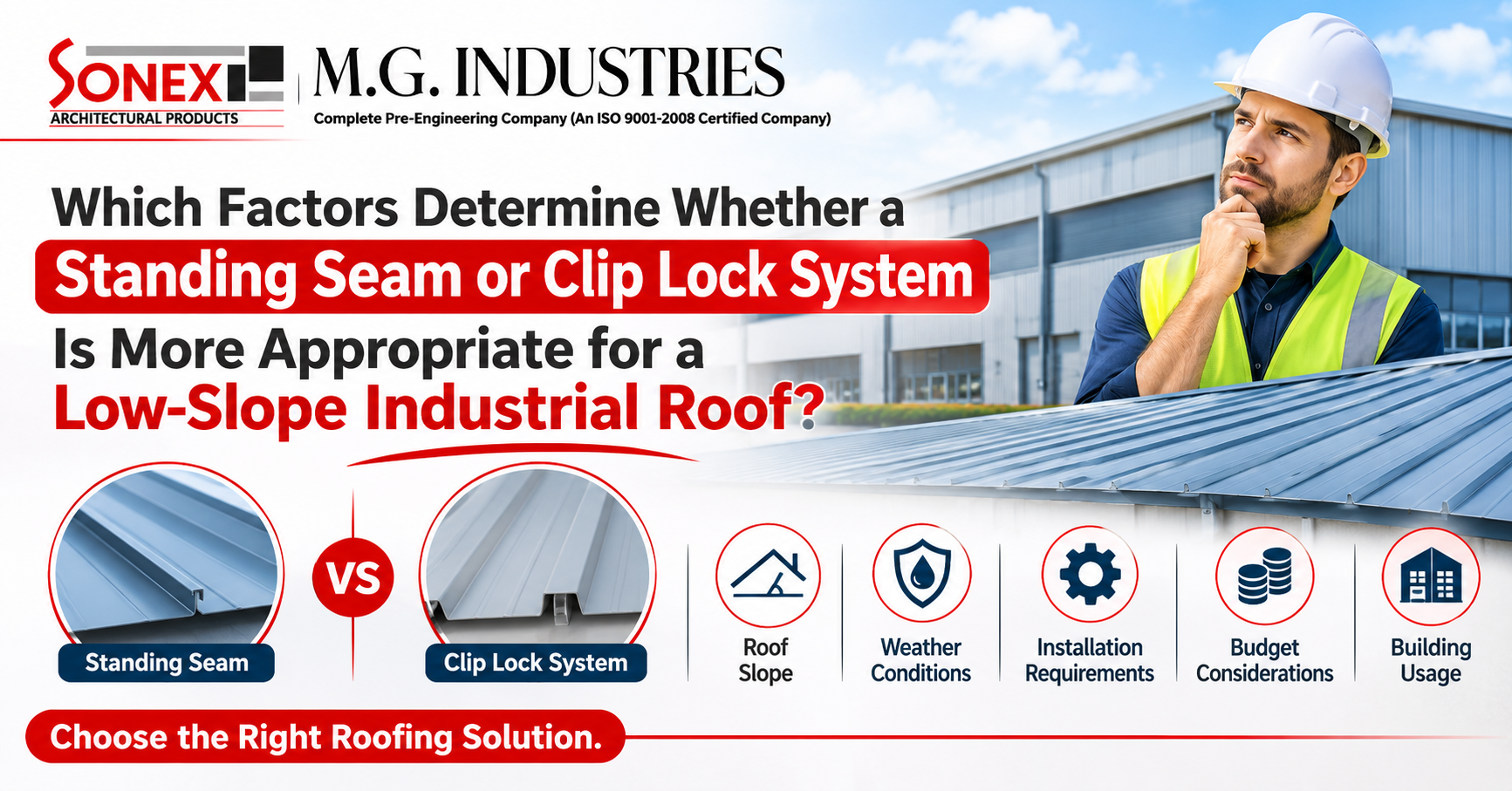
Choosing the right roofing system for a low-slope industrial building requires more than comparing sheet profiles or installation costs. The roof must manage rainwater effectively, withstand wind pressure, accommodate thermal movement, and provide long-term protection with minimal maintenance. Both standing seam and clip lock roofing systems are commonly considered for industrial applications, but their suitability depends on the building's design, roof pitch, environmental conditions, and performance requirements. Selecting the right Standing Seam Sheet system can help industrial property owners achieve reliable roof performance while reducing the risk of water leakage and maintenance issues. MG Industries helps businesses understand roofing material requirements and identify suitable metal roofing solutions for different industrial applications.
Understanding Standing Seam and Clip Lock Roofing Systems
Before comparing these roofing options, it is important to understand how their designs and fixing arrangements differ. Both systems use metal roofing panels, but their profiles, connection methods, and installation requirements can vary.
A standing seam roofing system uses raised vertical seams to connect adjacent metal panels. These seams help reduce direct exposure of the fasteners to rainwater because the fixing arrangements are generally concealed beneath the panels. Depending on the system design, mechanical seaming or snap-lock connections may be used to join the sheets. Clip lock roofing systems generally use concealed clips to secure metal panels to the supporting structure. The clips hold the panels in position while allowing the roofing material to accommodate movement caused by temperature changes. The panel edges are connected through an interlocking seam, creating a continuous roofing surface.
It is worth noting that clip lock is often considered a type of concealed-fix standing seam roofing. However, manufacturers may use these terms differently depending on their product profiles and connection mechanisms. Therefore, buyers should compare the actual technical specifications rather than relying only on product names.
1. Roof Slope and Water Drainage Requirements
Roof pitch is one of the most important factors when selecting a metal roofing system for an industrial building. Low-slope roofs have a smaller gradient, which means rainwater moves towards drainage points more slowly than it does on steep roofs. This increases the importance of selecting a roofing profile that can manage water flow without allowing it to enter through panel joints. The minimum recommended roof pitch varies according to the panel profile, seam design, material, and manufacturer's installation guidelines.
A properly designed Standing Seam Sheet system can provide effective water resistance because its raised seams reduce the chances of water passing directly through the panel connections. Some systems also offer mechanically locked seams that provide additional protection in applications where water exposure is a major concern. Clip lock systems can also be suitable for low-slope roofs when their profile and joint design meet the required drainage conditions. However, the panel height, seam arrangement, and recommended minimum slope must be checked before installation.
Industrial building owners should also consider the following drainage factors:
- Roof pitch and the direction of water flow.
- Position and capacity of gutters and downpipes.
- Possibility of water accumulation around roof openings.
- Drainage arrangements near roof edges and valleys.
- Risk of debris blocking water outlets.
The right choice depends on how effectively the complete roof design directs rainwater away from the building.
2. Wind Resistance and Structural Requirements
Industrial roofs are frequently exposed to strong winds, particularly in large open areas where there may be fewer surrounding structures to reduce wind pressure. Wind uplift can create stress on roofing panels, seams, clips, and supporting structures. Both standing seam and clip lock systems use concealed fixing arrangements, but their resistance to wind uplift depends on the complete installation design. The number and spacing of clips, their material strength, panel dimensions, seam configuration, and supporting structure all influence the roof's ability to withstand wind loads. A system that performs well in one building may not be suitable for another with different dimensions or exposure conditions.
Before selecting a roofing profile, industrial project planners should evaluate:
- Wind speed and design wind pressure for the building location.
- Roof height and overall building dimensions.
- Panel width and length.
- Clip spacing and fixing strength.
- Structural support and connection details.
A Standing Seam Sheet option should be selected only after checking whether its tested or calculated performance meets the project's structural requirements. Similar checks are necessary for clip lock systems. Following applicable structural design standards and manufacturer recommendations is essential, especially for factories, warehouses, and large industrial facilities.
3. Thermal Movement and Panel Expansion
Metal roofing materials expand when temperatures rise and contract when temperatures fall. Industrial buildings with large roof areas may experience considerable temperature variations throughout the day and across different seasons. If the roofing system does not accommodate this movement, stress can develop around fasteners, clips, seams, and supporting connections. Over time, this may contribute to panel distortion, loose connections, or damage to the roofing assembly. Standing seam systems often use concealed clips that allow panels to move along their length. Depending on the design, fixed and sliding clips may be used to manage thermal expansion while keeping the panels securely connected.
Clip lock systems also accommodate thermal movement through their concealed fixing arrangements. However, the amount of movement allowed depends on the clip design, panel length, and installation method. When comparing these systems, buyers should examine the following:
- Whether the clips allow sufficient movement.
- How long the individual roofing panels will be.
- Where fixed points are located.
- Whether the system is suitable for the expected temperature range.
- How roof penetrations and end connections accommodate movement.
The objective is to select a system that remains stable while allowing the metal panels to expand and contract naturally.
4. Roof Design, Panel Length, and Installation Requirements
The shape and layout of an industrial roof also influence which roofing system is more appropriate. A simple warehouse roof with long, uninterrupted slopes may have different requirements from a factory building with multiple roof levels, skylights, ventilation openings, and equipment installations. Standing seam systems are available in different profiles and connection arrangements. Some mechanically seamed options can be suitable for projects requiring specific water-resistance performance, provided the design and installation meet the relevant requirements. Clip lock systems may offer practical installation options for industrial roofs with suitable supporting arrangements and compatible panel profiles.
However, installation quality is equally important for both systems. Incorrect clip positioning, poorly aligned panels, improper seam connections, and unsuitable flashing details can affect roof performance. Before finalising the system, project teams should assess the roof layout, panel lengths, installation access, and availability of trained installers. They should also check whether the selected system can accommodate roof openings, ridges, eaves, and junctions without compromising weather protection.
5. Material Quality, Coating, and Corrosion Resistance
The performance of a metal roofing system depends not only on its profile but also on the quality of the material used. Industrial roofs may be exposed to heavy rainfall, humidity, dust, pollution, and chemical environments, depending on the location and nature of the facility. Material selection should consider the metal type, sheet thickness, protective coating, and expected exposure conditions. Pre-coated steel roofing sheets, for example, may be considered where surface protection and appearance are important. However, the coating specification must match the surrounding environment. Buildings located near coastal areas or industrial zones may require additional attention to corrosion resistance. Important material-related considerations include:
- Base metal quality and thickness.
- Type and thickness of protective coating.
- Resistance to corrosion and weather exposure.
- Compatibility with the supporting clips and accessories.
- Availability of suitable matching flashing components.
A high-quality profile cannot compensate for poor material selection. Buyers should therefore evaluate the complete roofing specification rather than making a decision based only on the appearance of the panels.
6. Installation Cost and Long-Term Maintenance
Initial installation cost is an important consideration for industrial construction projects. However, selecting a roofing system only because it has a lower upfront price may not always be the most practical decision. Standing seam and clip lock systems can differ in material costs, accessories, installation time, labour requirements, and fabrication methods. Mechanically seamed systems may require specialised equipment and trained installers, while other clip lock profiles may have different installation requirements. Maintenance costs should also be considered. Concealed-fix systems reduce the need for exposed fasteners across the main roof surface, but they still require periodic inspection of seams, clips, flashings, gutters, and drainage points.
A useful comparison should include:
| Evaluation Factor |
Standing Seam System |
Clip Lock System |
| Joint arrangement |
Raised vertical seams |
Interlocking panel seams |
| Fixing method |
Generally concealed, depending on profile |
Concealed clips |
| Water resistance |
Depends on seam design and installation |
Depends on profile and joint design |
| Thermal movement |
Can be accommodated through suitable clips |
Can be accommodated through suitable clips |
| Installation |
May require specialised seaming equipment |
Depends on the specific clip lock profile |
| Maintenance |
Requires inspection of seams and roof accessories |
Requires inspection of clips, seams, and drainage |
| Cost |
Depends on material, profile, and installation |
Depends on material, profile, and installation |
The final decision should account for the expected service conditions, installation quality, and maintenance requirements rather than focusing only on the initial project budget.
7. Which Roofing System Is Better for Different Industrial Applications?
There is no single roofing solution that works equally well for every industrial building. The right option depends on the project's technical requirements and the performance expected from the roof.
A standing seam system may be worth considering when a project requires specific seam-locking arrangements, concealed fixings, and effective management of water exposure. Mechanically seamed profiles may be particularly relevant where the roof design and manufacturer's specifications support their use on low slopes. A clip lock system may be appropriate when its panel profile meets the required roof pitch, drainage conditions, structural requirements, and installation specifications. It can also be a practical option for projects where the selected profile offers a suitable balance between installation requirements and roofing performance.
For factories, warehouses, manufacturing units, and other industrial facilities, the selection process should begin with a technical assessment of the building rather than a preference for a particular product name.
Conclusion
Selecting between a Standing Seam Sheet and clip lock roofing requires careful consideration of roof pitch, drainage, wind uplift, thermal movement, material quality, installation methods, and long-term maintenance. Both systems can serve industrial roofing applications, but their suitability depends on the specific panel design and the conditions of the building. A well-planned roofing system should provide reliable weather protection, accommodate structural and temperature-related movement, and remain practical to maintain over time. Before making a purchase, compare technical specifications, check minimum slope requirements, and ensure that the installation method is suitable for the project.
MG Industries can help businesses explore metal roofing requirements and understand the factors involved in selecting suitable roofing materials for industrial applications. Making an informed decision at the planning stage can help avoid installation challenges and support better roof performance over the long term.
Frequently Asked Questions
1. What is the main difference between standing seam and clip lock roofing systems?
The main difference lies in their panel connection and seam design. Standing seam systems use raised vertical seams to connect adjacent panels, while clip lock systems use concealed clips to secure the panels to the supporting structure. Both can offer concealed-fix roofing solutions.
2. Can standing seam roofing be used for low-slope industrial roofs?
Yes, certain standing seam roofing profiles are suitable for low-slope industrial roofs. However, their suitability depends on the minimum roof pitch, seam design, drainage arrangement, and manufacturer's installation recommendations.
3. Is a clip lock roofing system suitable for heavy rainfall?
A clip lock system can be suitable for areas receiving heavy rainfall when its profile, joint design, and roof slope support effective water drainage. Proper installation of seams, flashings, gutters, and downpipes is also important.
4. How does thermal expansion affect metal roofing systems?
Metal roofing panels expand in hot temperatures and contract in cooler conditions. If the fixing arrangement does not allow sufficient movement, stress may develop around clips, seams, and connections. Suitable fixing systems help accommodate this natural movement.
5. What factors should be checked before selecting an industrial metal roofing system?
Important factors include roof slope, rainfall exposure, wind load, panel dimensions, material thickness, coating quality, thermal movement, installation requirements, and maintenance needs. Comparing these specifications helps identify a suitable roofing system for the building.
 20/6 Nuchem Compound, Mathura Road, Faridabad.
 sonexdecor@gmail.com
 +91 9599213709