If you have walked through the terminal of an airport or metro station, chances are that it will not be the ceiling which will strike you as the first thing. People are normally interested in signs, platforms, gates, lighting, and activities around the place. Nevertheless, there are some duties the ceiling has to perform on a daily basis.
These include concealing wiring, ventilation systems, lighting, communication, etc., while making the ceiling part of the aesthetic value of the facility. Besides, in places where thousands of people pass by every day, the material used should be durable enough and allow service providers to maintain the services when required.
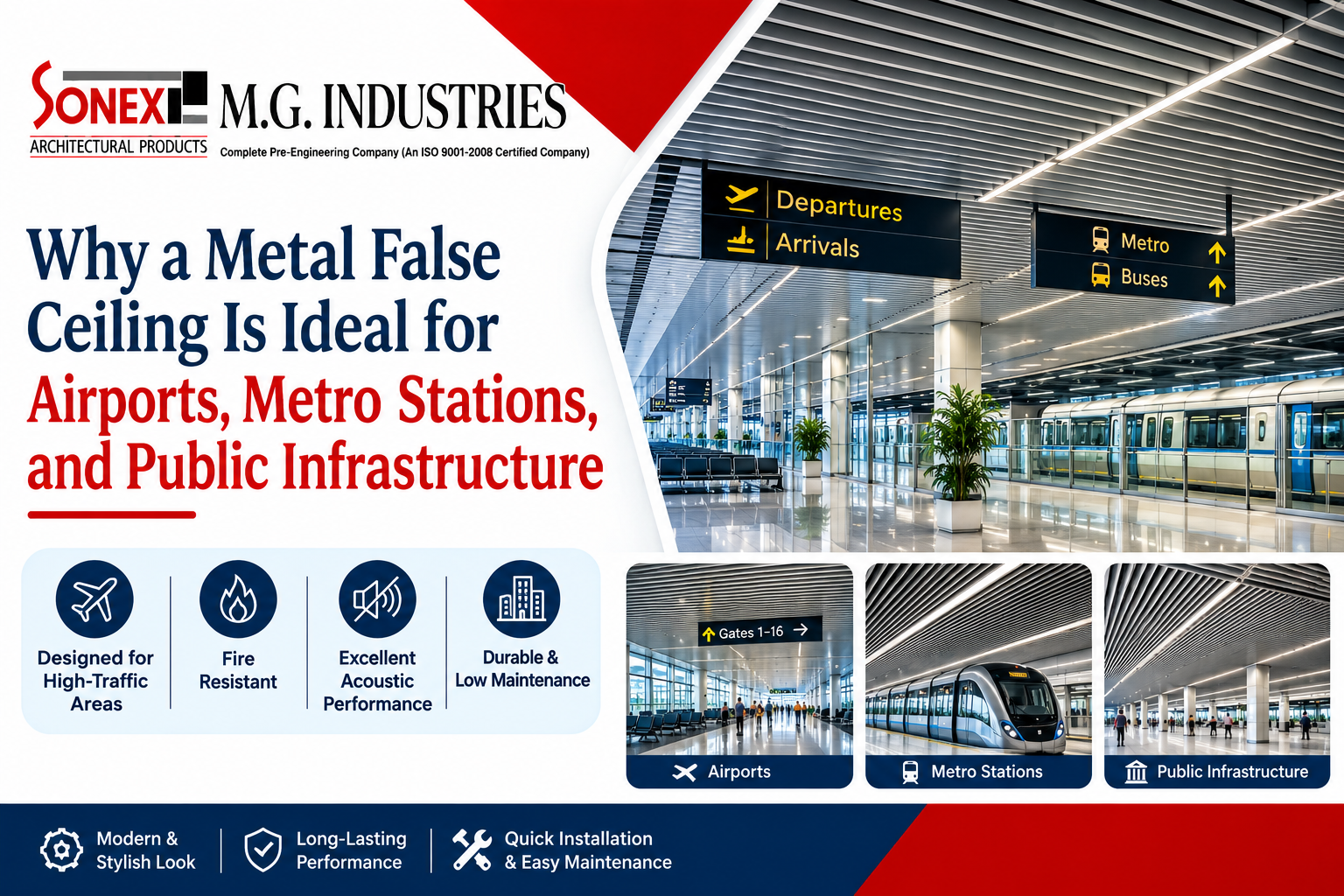
That is why the Metal False Ceiling is becoming a viable option for airports, metro stations, railway stations, terminals, and other public facilities construction projects.
Industry Overview
Public infrastructure projects differ in demands from traditional office or domestic interior spaces. Airports and metros are used for prolonged periods, have high foot traffic, and involve complicated systems of mechanics, electricity, and safety features.
With the development of public infrastructure projects, ceiling systems are more often required not only to serve decorative purposes but also to accommodate other components such as lighting, ventilation systems, fire safety equipment, signage, soundproofing, and access for maintenance while retaining the aesthetic appearance of the building.
A metal false ceiling is a solution that can satisfy all of the aforementioned demands due to its modular panels and specialized suspension system. Depending on the project's needs, metal panels can be made or chosen in varying dimensions, finishes, perforations, and configurations.
Why Metal False Ceiling Systems Suit High-Traffic Infrastructure
The biggest advantage of metal ceiling systems in airports and metro stations is their ability to combine durability with accessibility.
Unlike ceiling materials that can be more vulnerable to cracking, moisture-related deterioration, or physical damage, properly specified metal systems can provide a robust surface for demanding environments.
Metal panels can also be designed for easy integration with building services. Lighting fixtures, air-conditioning outlets, speakers, fire detection systems, and other infrastructure can be incorporated into the ceiling layout during the design stage.
Another important consideration is maintenance. Public facilities cannot always afford lengthy closures for routine repairs. Modular ceiling systems can allow selected panels to be removed when technicians need access to services above the ceiling.
This can help reduce disruption and make routine maintenance more manageable.
Expert Commentary
From a design and engineering perspective, choosing a ceiling for a major infrastructure project requires consideration of the entire building environment rather than appearance alone.
Professionals typically evaluate the following factors before specifying a ceiling system:
- Expected pedestrian traffic
- Environmental conditions
- Fire and safety requirements
- Acoustic performance
- Cleaning requirements
- Access to mechanical and electrical services
- Panel durability
- Corrosion protection
- Installation requirements
- Long-term maintenance
The right Metal False Ceiling should be selected according to the project's technical specifications and operating conditions.
For example, an enclosed airport terminal may have different requirements from an open or semi-open metro platform exposed to changing weather conditions. Material selection, coating, supporting framework, and installation methods should therefore be determined according to the actual application.
Metal Ceiling Applications in Airports and Metro Stations
Airports provide one of the clearest examples of where metal ceiling systems can combine design and performance.
Ceilings may be installed across passenger terminals, check-in areas, departure halls, arrival zones, corridors, lounges, retail areas, and other public spaces. Designers can use different panel configurations and finishes to create a consistent architectural identity throughout the facility.
Metro stations have similarly diverse requirements. Ceiling systems may be used in concourses, ticketing areas, corridors, platforms, waiting zones, and connecting passages.
In these environments, the ceiling must coexist with lighting, ventilation, security equipment, signage, and communication systems.
The modular nature of metal panels can provide flexibility when these services require inspection, replacement, or modification.
Other potential applications include:
- Railway stations
- Bus terminals
- Convention centres
- Government buildings
- Educational campuses
- Large healthcare facilities
- Shopping and transit complexes
Proof & Real-World Perspective
Imagine a metro station where an electrical component located above the ceiling requires inspection. In a poorly planned ceiling system, accessing that component could involve significant dismantling and additional labour.
A properly designed modular ceiling can provide designated access points and removable panels, making maintenance more straightforward.
The same principle applies to airport terminals, where lighting, air-conditioning, fire safety, and communication systems require periodic inspection.
There is also an architectural benefit. Large public facilities can sometimes feel visually overwhelming because of the number of services required above occupied areas. A well-designed ceiling helps conceal these systems and creates a cleaner visual environment for passengers and visitors.
Acoustic performance can also be important. Airports and transport facilities can be noisy environments, so ceiling panels with suitable acoustic characteristics may contribute to better sound management when incorporated as part of a broader acoustic design strategy.
Analysis
The suitability of a Metal False Ceiling depends on how well the system matches the project's technical and operational requirements.
Key Advantages
- Strong and durable construction
- Flexible architectural finishes
- Easy integration with building services
- Convenient access for maintenance
- Potential acoustic benefits with suitable panel designs
- Easy cleaning for appropriate finishes
- Compatibility with modern lighting systems
- Suitable for large commercial and public facilities
However, metal ceilings are not automatically the right solution for every project. The specification needs to consider the building's environment and operational demands.
Common Mistakes to Avoid
Project teams should avoid selecting ceiling products based only on appearance or initial price.
Common mistakes include:
- Ignoring environmental exposure
- Selecting unsuitable coatings
- Underestimating maintenance access requirements
- Failing to coordinate ceiling layouts with MEP services
- Overlooking acoustic requirements
- Choosing inexperienced installation teams
- Not considering long-term maintenance
These decisions can affect the performance and appearance of the completed installation.
Recommendations
The selection process should begin well before ceiling installation. Architects, engineers, contractors, and facility managers should coordinate their requirements during the design stage.
First, determine the building's operational conditions. Consider whether the ceiling will be exposed to moisture, dust, temperature changes, heavy public traffic, or other environmental factors.
Next, evaluate the material and finish. The selected system should be appropriate for the expected conditions and compatible with the project's safety and performance requirements.
Service coordination is equally important. Lighting, HVAC, sprinklers, electrical systems, signage, cameras, speakers, and other equipment should be considered before finalising the ceiling grid.
Finally, evaluate the manufacturer and installer. A reliable supplier should be able to provide technical guidance, suitable product specifications, installation support, and consistent quality.
The objective should not simply be to install a visually attractive ceiling. It should be to create a system that continues to perform efficiently throughout the building's operational life.
Closing Thoughts
Airports, metro stations, and public infrastructure demand building materials that can handle high usage while supporting complex technical requirements and modern architectural expectations. A properly specified Metal False Ceiling provides a practical combination of durability, accessibility, design flexibility, and service integration for these demanding environments.
The best results come from selecting the ceiling system according to the project's actual operating conditions, maintenance requirements, safety considerations, and architectural goals. For organisations looking for dependable metal ceiling solutions, MG Industries offers products and expertise suited to modern commercial and industrial applications. Choosing the right system at the planning stage can help create public spaces that remain functional, maintainable, and visually consistent for years to come.
 20/6 Nuchem Compound, Mathura Road, Faridabad.
 sonexdecor@gmail.com
 +91 9599213709