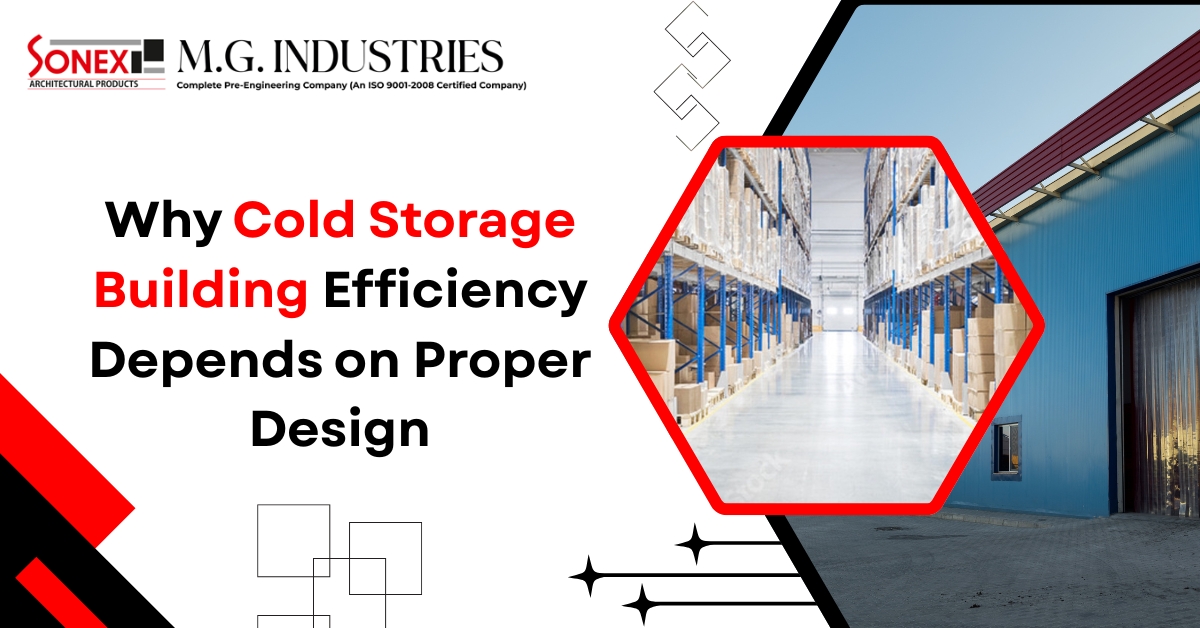
Cold Storage Buildings have become a critical component of modern supply chains, particularly for industries handling perishable goods such as food, pharmaceuticals, and chemicals. These facilities are designed to maintain precise temperature
and humidity conditions, ensuring product safety and quality over extended periods. However, the efficiency of a cold storage building depends heavily on proper design, encompassing aspects such as layout, insulation, materials, and equipment placement.
A well-designed cold storage facility can significantly reduce operational costs, energy consumption, and maintenance challenges, while poorly planned structures can lead to higher expenses, wastage, and system inefficiencies.
Importance of Layout Planning
The layout of a cold storage building is the foundation of its operational efficiency. Proper design ensures smooth workflow, optimal storage capacity, and easy access to products. Key considerations include aisle width, shelving configuration,
loading and unloading zones, and integration of temperature-controlled areas. For instance, high-traffic zones should be positioned near entrances and exits to minimize the movement of goods, which reduces temperature fluctuations and energy usage. Efficient layouts also
accommodate future expansion without requiring major structural modifications. This level of planning is essential for maintaining operational consistency and improving overall productivity.
Insulation and Thermal Management
One of the most critical aspects of cold storage design is insulation. The choice of insulation materials, thickness, and installation technique determines how effectively the building maintains its internal temperature. High-quality insulated panels, such as PUF (Polyurethane Foam) panels,
are commonly used to provide excellent thermal resistance and reduce heat gain from external sources. Proper sealing of walls, ceilings, and floors prevents cold air leakage, which not only improves energy efficiency but also protects stored products from spoilage. Thermal management strategies,
such as minimizing direct sunlight exposure and incorporating reflective roofing, further enhance the building’s energy performance.
Selection of Construction Materials
The materials used in constructing a cold storage building have a direct impact on its efficiency and longevity. Panels, roofing sheets, and flooring materials should be chosen for their durability, corrosion resistance, and insulation properties. High-quality metal panels with protective coatings
are ideal for resisting moisture, temperature variations, and mechanical stress. Floors should support heavy loads while maintaining insulation integrity. Proper material selection also minimizes maintenance requirements and reduces long-term costs, ensuring that the facility operates efficiently throughout
its lifespan.

HVAC and Refrigeration System Integration
A cold storage building’s design must account for the integration of HVAC and refrigeration systems, which are the backbone of temperature control. Proper placement of cooling units, ductwork, and air circulation paths is essential for uniform temperature distribution across the facility. Design considerations include
zoning areas based on temperature requirements, avoiding obstruction to airflow, and ensuring accessibility for maintenance. A strategically designed system reduces energy consumption and improves the lifespan of equipment, while poorly designed systems may struggle to maintain desired conditions, leading to inefficiencies
and increased operational costs.
Energy Efficiency Considerations
Energy efficiency is a key objective in cold storage building design. Efficient buildings reduce electricity costs and minimize environmental impact. Incorporating features such as LED lighting, energy-efficient compressors, variable frequency drives, and smart monitoring systems enhances overall energy performance.
Additionally, the design should consider building orientation, natural lighting, and ventilation to reduce dependence on artificial cooling. Proper insulation, strategic layout, and equipment optimization work together to ensure that the facility consumes the least amount of energy while maintaining optimal storage conditions.
Safety and Compliance
Cold storage buildings must comply with safety regulations and industry standards to protect both personnel and stored goods. Proper design ensures that safety measures, such as emergency exits, fire-resistant materials, and temperature monitoring systems, are integrated without compromising operational efficiency. In addition,
adherence to compliance standards ensures that products meet quality requirements and minimizes the risk of regulatory issues. A well-designed building balances safety and efficiency, allowing smooth operation even under high-stress conditions or emergency scenarios.
Maintenance and Operational Ease
Proper design also facilitates ease of maintenance and operational management. Accessible refrigeration units, modular panels, and strategically placed monitoring equipment allow quick inspections and timely repairs without disrupting workflow. Well-planned drainage and ventilation systems prevent moisture buildup and minimize
potential damage. A building designed with maintenance in mind not only extends the lifespan of equipment and infrastructure but also ensures consistent efficiency and reduced downtime, critical for industries relying on uninterrupted cold storage.
Scalability and Future-Proofing
Cold storage needs are evolving rapidly with the growth of e-commerce, pharmaceuticals, and global supply chains. Proper design allows for scalability and flexibility, enabling expansion without significant structural modifications. Modular construction techniques, flexible layouts, and pre-engineered components make
it easier to accommodate increased storage capacity, new temperature zones, or advanced automation technologies. By anticipating future needs, designers ensure that the facility remains relevant, efficient, and cost-effective in the long term.
Role of Expertise in Cold Storage Design
Creating an efficient cold storage building requires expertise in architecture, engineering, and refrigeration technology. Collaborating with experienced manufacturers and consultants ensures that every aspect of the design—from insulation and layout to HVAC integration and energy optimization—is executed with precision. Companies
specializing in cold storage construction bring valuable knowledge of industry standards, materials, and technologies that directly contribute to building efficiency. Working with such experts reduces risks, enhances performance, and delivers a facility that meets both current and future operational requirements.

Conclusion
The efficiency of a cold storage building is intrinsically linked to its design. From layout planning and insulation to material selection, energy efficiency, and safety compliance, every aspect must be carefully considered to ensure optimal performance. Properly designed facilities reduce operational costs, improve energy
utilization, facilitate maintenance, and enhance product preservation, providing a competitive advantage to businesses that rely on cold storage. For companies seeking high-quality, efficient, and reliable cold storage solutions, MG Industries stands out as a trusted partner, delivering expertly designed facilities that combine
innovation, durability, and operational excellence.
 20/6 Nuchem Compound, Mathura Road, Faridabad.
 sonexdecor@gmail.com
 +91 9599213709